Weren’t / Wasn’t
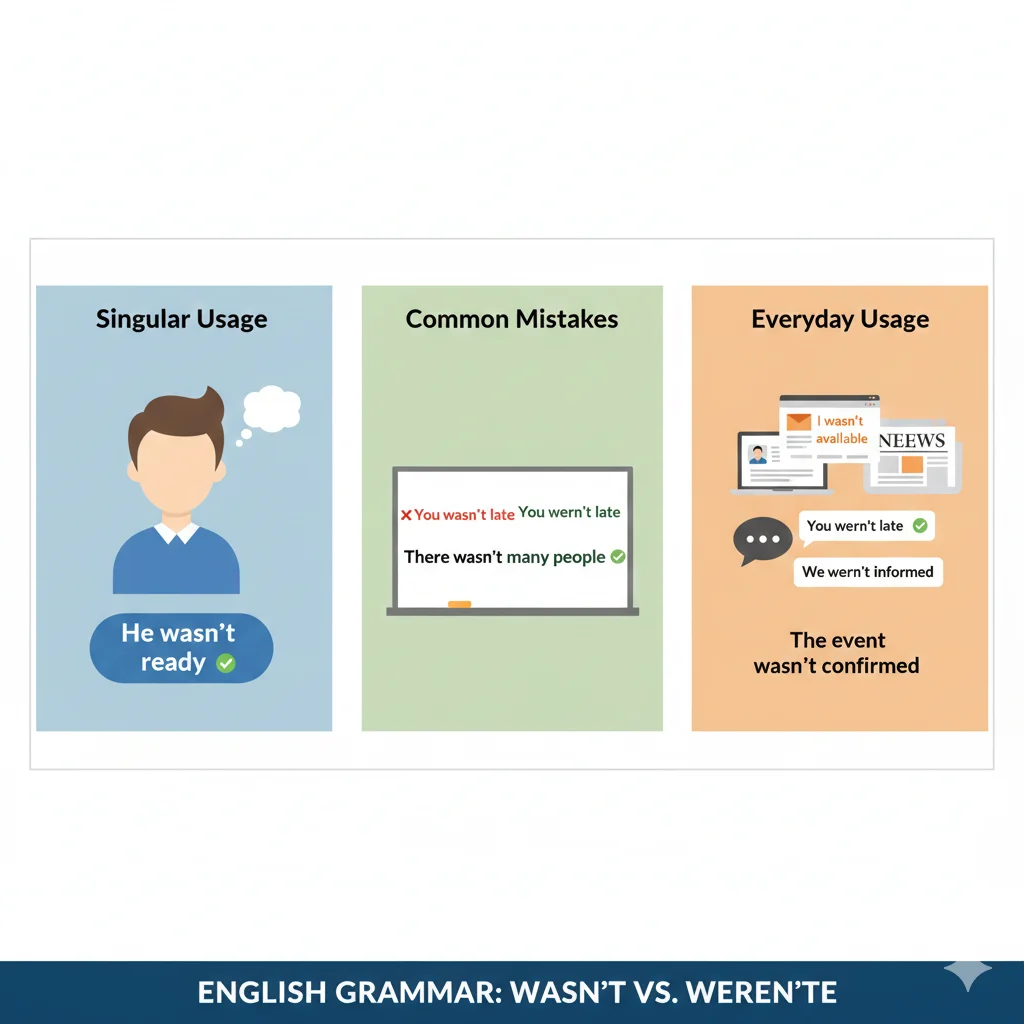
“Wasn’t” and “weren’t” are both past tense negative forms of “to be.”
The difference depends on the subject.
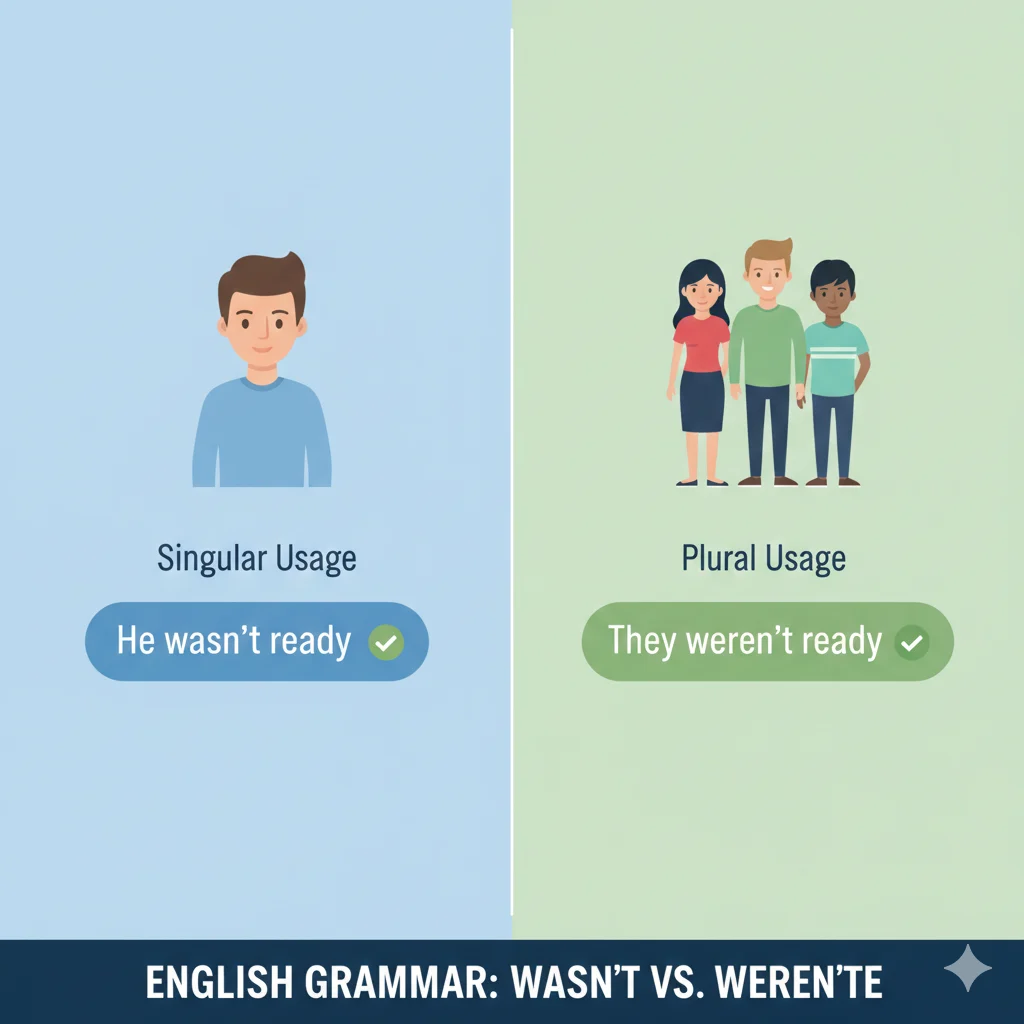
- Wasn’t = was not → used with I, he, she, it
Example: She wasn’t ready. - Weren’t = were not → used with you, we, they
Example: They weren’t happy.
The confusion comes from phrases like “I wish I weren’t” and question tags such as “wasn’t I?” or “weren’t I?” These forms follow grammar rules, not everyday speech. Understanding this solves the common question: What is the difference between wasn’t and weren’t?
The Origin of Weren’t / Wasn’t
Both wasn’t and weren’t come from Old English forms of the verb “to be.”
- Wasn’t comes from was + not
- Weren’t comes from were + not
Over time, English speakers shortened these phrases. This is how contractions were born.
Why do both forms exist?
English kept two past tense forms:
- Was for singular subjects
- Were for plural subjects
This is why weren t wasn t meaning is tied to number and grammar, not spelling style.
Why does “I wish I weren’t” sound strange?
This comes from the subjunctive mood, which expresses wishes, hypotheticals, or unreal situations. Historically, “were” was used for all subjects in these cases.
That history explains:
- I wish I weren’t late.
- If I were you…
British English vs American English Spelling
There is no spelling difference between British and American English for wasn’t and weren’t. Both spell and use them the same way.
The difference is in preference and formality.
| Context | British English | American English |
|---|---|---|
| Everyday speech | More “weren’t I” | More “wasn’t I” |
| Formal writing | “I wish I were” | Same |
| Question tags | “weren’t I?” accepted | “wasn’t I?” common |
| Informal tone | Contractions used | Contractions used |
So when people ask “Where was weren’t wasn’t?”, the answer is: they exist in both dialects equally.
Which Spelling Should You Use?
Your choice depends on audience and grammar, not location.
Use wasn’t when:
- The subject is I, he, she, it
- You are writing informally
- You want natural spoken English
Example:
- I wasn’t ready.
- There wasn’t enough time.
Use weren’t when:
- The subject is you, we, they
- You are using the subjunctive mood
- You are writing formally
Example:
- They weren’t invited.
- I wish I weren’t so tired.
Global English advice
If unsure:
- Use was not / were not in formal writing
- Use contractions in emails and casual content
This answers common searches like “When to use was not and wasn’t?”
Common Mistakes with Weren’t / Wasn’t
Many errors come from mixing spoken English with grammar rules.
1. Saying “You wasn’t”
❌ You wasn’t there.
✅ You weren’t there.
This solves the confusion: You wasn t or weren t
2. Using “wasn’t” after there
❌ There wasn’t many people.
✅ There weren’t many people.
Correct rule:
- There wasn’t → singular noun
- There weren’t any → plural noun
This answers “There wasn t or there weren t any”
3. Question tags with “I”
❌ I was late, wasn’t I? (informal OK)
✅ I was late, weren’t I? (formal)
Both are used, but grammar prefers weren’t I.
This explains “Wasn t I or weren t I question tag”
4. Wishes and hypotheticals
❌ I wish I wasn’t here. (informal)
✅ I wish I weren’t here. (formal)
This solves “Is it I wish I weren’t or I wish I wasn’t?”
5. Past tense confusion
Both forms are past tense.
- He wasn’t happy yesterday.
- They weren’t ready last night.
This covers “Weren t wasn t past tense”
Weren’t / Wasn’t in Everyday Examples
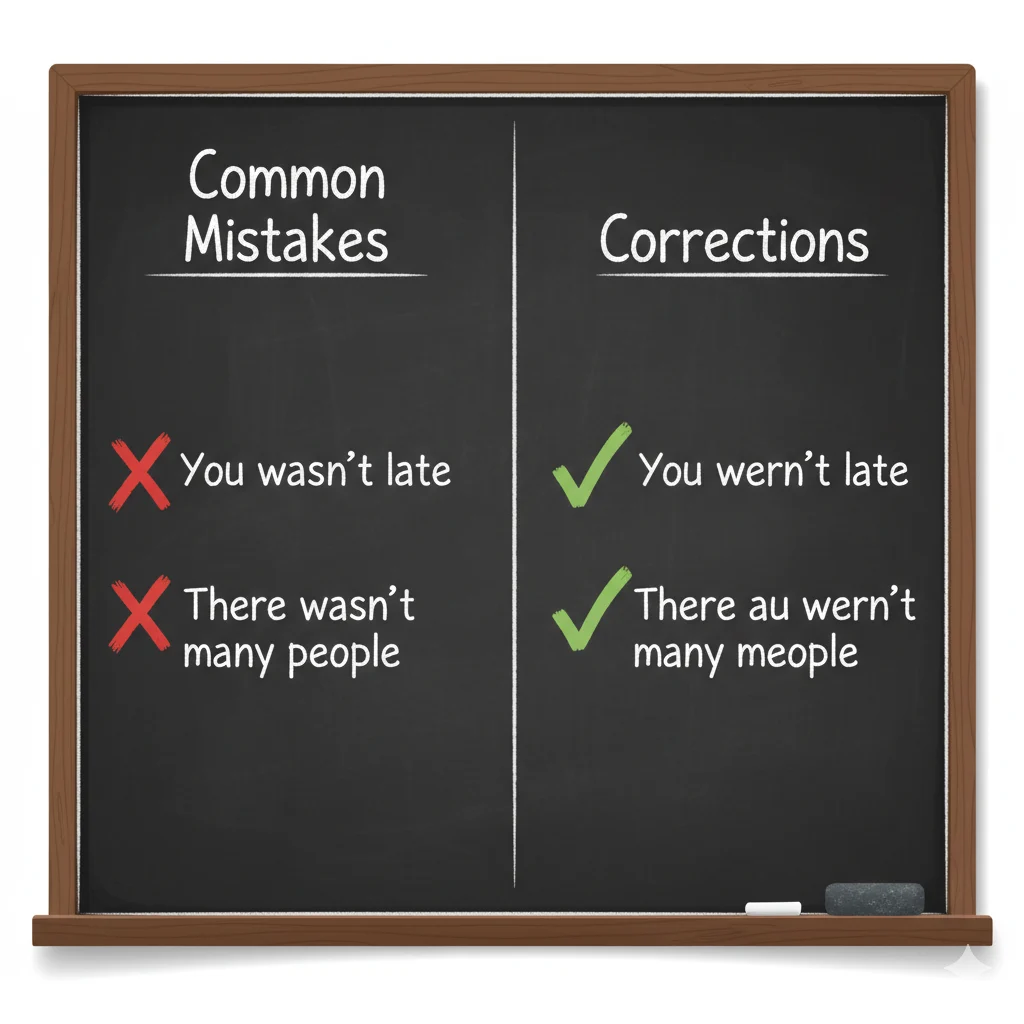
Here are clear wasn t and weren t examples across real life.
Emails
- Sorry I wasn’t able to reply earlier.
- We weren’t aware of the update.
News
- The decision wasn’t final.
- The reports weren’t confirmed.
Social Media
- I wasn’t expecting this!
- You weren’t kidding.
Formal Writing
- The results were not reliable.
- The agreement was not signed.
In Sentences
- She wasn’t invited.
- They weren’t informed.

These examples answer:
- Weren t wasn t in a sentence
- Weren ‘t you meaning → Weren’t you aware of the change?
Weren’t / Wasn’t – Google Trends & Usage Data
Search data shows wasn’t is more common than weren’t worldwide.
Why?
- Wasn’t is used with singular subjects
- Most sentences talk about one person or thing
Popular by country
- United States: “wasn’t I?” is common
- United Kingdom: “weren’t I?” appears more often
- India & Global English: mix of both
Context matters
- Spoken English → more wasn’t
- Grammar searches → more weren’t
This explains why people search:
- What is the difference between wasn’t and weren’t?
- Where was weren’t wasn’t?
Comparison Table: Weren’t vs Wasn’t
| Feature | Wasn’t | Weren’t |
|---|---|---|
| Meaning | was not | were not |
| Subject | I, he, she, it | you, we, they |
| Formal wish | ❌ | ✅ |
| Question tag with I | Common | Correct |
| Past tense | Yes | Yes |
FAQs About Weren’t / Wasn’t
1. What is the difference between wasn’t and weren’t?
It depends on the subject. Wasn’t is singular. Weren’t is plural or subjunctive.
2. When to use was not and wasn’t?
Use was not in formal writing. Use wasn’t in casual speech and writing.
3. Is “I wish I weren’t” correct?
Yes. It is grammatically correct and formal.
4. Can I say “I wish I wasn’t”?
Yes, in casual English. Formal English prefers weren’t.
5. Which is correct: “You wasn’t” or “You weren’t”?
You weren’t is always correct.
6. Is “There wasn’t many people” wrong?
Yes. Correct form is There weren’t many people.
7. Are weren’t and wasn’t past tense?
Yes. Both are past tense negative forms of “to be.”
Conclusion
Understanding weren’t / wasn’t is easier than it looks. The main rule is simple: match the verb to the subject. Use wasn’t with singular subjects and weren’t with plural ones. For wishes and unreal situations, grammar prefers weren’t, even with I.
Many learners get confused by informal speech, question tags, and expressions like “I wish I weren’t.” Now you know these forms follow clear grammar rules rooted in English history. Whether you are writing emails, social posts, or formal documents, choosing the right form makes your English sound natural and confident.
If you remember just one thing, remember this: everyday speech allows flexibility, but formal writing rewards accuracy. Mastering this small detail improves clarity, credibility, and fluency in English.

“Elizabeth Gaskell was a Victorian novelist known for compassionate social realism, memorable characters, and classics like North and South and Cranford.”