Many English learners search for “subjunctive or indicative” because they feel confused about when to use each mood. In simple terms, grammar moods show the speaker’s attitude toward an action. But choosing between subjunctive or indicative grammar can feel tricky.
For example, should you say “If I was rich” or “If I were rich”? Both sound familiar, but only one is correct in formal grammar. This confusion happens because the subjunctive mood is less common in everyday English but still important in formal writing, exams, and language learning.
The topic becomes even more confusing when learning other languages such as Spanish or French, where the difference between subjunctive or indicative Spanish and subjunctive or indicative French is used much more often.
This article explains the difference between present subjunctive or indicative, shows clear subjunctive or indicative examples, and helps you understand when each mood is correct. By the end, you will know the rules, common mistakes, and real-life usage so you can write and speak English with confidence.
Subjunctive or Indicative – Meanings
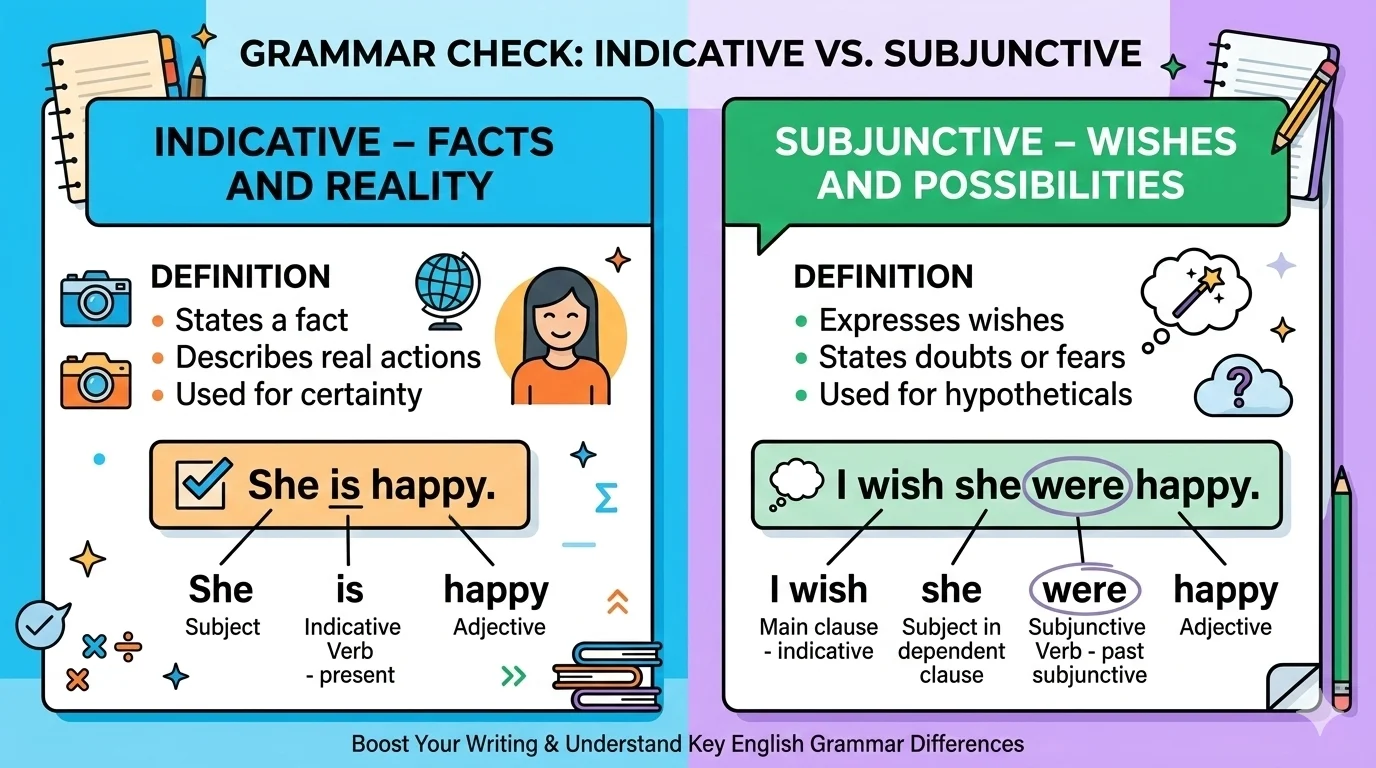
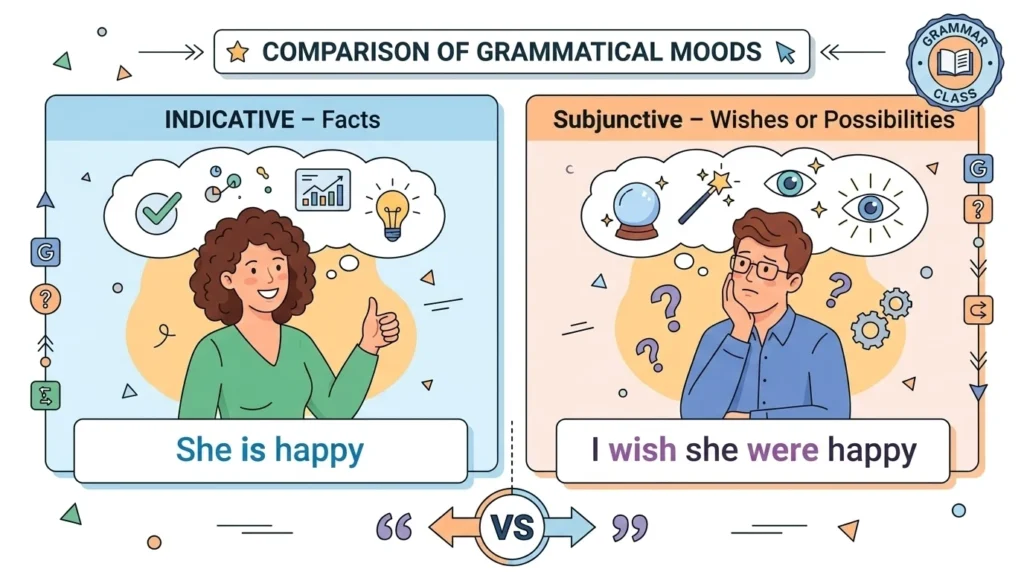
The difference between subjunctive or indicative is about certainty vs possibility.
| Mood | Meaning | Example |
|---|---|---|
| Indicative | Used for facts and real situations | She is happy today. |
| Subjunctive | Used for wishes, doubts, or unreal situations | I wish she were here. |
Simple Examples
Indicative vs subjunctive examples
- Indicative: He goes to school every day.
- Subjunctive: I suggest that he go to school earlier.
Another example:
- Indicative: She was at the meeting.
- Subjunctive: If she were at the meeting, she would agree.
The indicative mood describes reality, while the subjunctive mood describes wishes, possibilities, or hypothetical ideas.
The Origin of Subjunctive or Indicative
The concept of subjunctive or indicative grammar comes from Latin grammar. Latin used different verb forms to show mood.
The word subjunctive comes from the Latin subjungere, meaning “to join or connect.” It was used when a sentence depended on another clause.
The indicative comes from the Latin word indicativus, meaning “to point out or state.” This mood simply states facts.
Why spelling or forms differ
Over time, English simplified many verb forms. As a result:
- The subjunctive mood became less common.
- Many speakers now use the indicative instead of subjunctive in informal speech.
Example change:
Old grammar style:
If I were king…
Modern informal speech:
If I was king…
Both are heard today, but “were” remains correct in formal grammar.
British English vs American English Spelling
In most cases, subjunctive or indicative spelling is the same in British and American English. However, usage frequency differs.
- American English uses the subjunctive more often in formal writing.
- British English sometimes replaces it with modal verbs like should.
Example:
American English
I suggest that he go to the doctor.
British English
I suggest that he should go to the doctor.
Comparison Table
| Situation | American English | British English |
|---|---|---|
| Suggestion | I suggest he go | I suggest he should go |
| Formal request | It is essential that she be present | It is essential that she should be present |
| Hypothetical | If I were you | If I were you |
Both forms are correct depending on audience and style.
Which Spelling Should You Use?
Choosing subjunctive or indicative depends on who you are writing for.
Use American style if:
- Your audience is in the United States
- You write academic papers
- You follow formal grammar rules
Example:
The teacher recommended that he study more.
Use British style if:
- Your audience is in the UK, Australia, Canada, or Commonwealth countries
- Your writing is formal but conversational
Example:
The teacher recommended that he should study more.
Global writing tip
If you write for an international audience (blogs, SEO articles, online content), both forms are understood. Choose clear and simple grammar.
Common Mistakes with Subjunctive or Indicative
Many learners make the same mistakes when choosing subjunctive or indicative.
Mistake 1: Using indicative instead of subjunctive
Incorrect:
I wish I was taller.
Correct:
I wish I were taller.
Mistake 2: Adding “to” after verbs like suggest
Incorrect:
I suggest him to go.
Correct:
I suggest that he go.
Mistake 3: Confusing tense with mood
Incorrect:
If she is here, she would help.
Correct:
If she were here, she would help.
Mistake 4: Forgetting base verb form
Subjunctive often uses the base verb.
Incorrect:
They demanded that he goes.
Correct:
They demanded that he go.
Practicing subjunctive or indicative exercises helps avoid these errors.
Subjunctive or Indicative in Everyday Examples
The subjunctive mood appears in many daily situations.
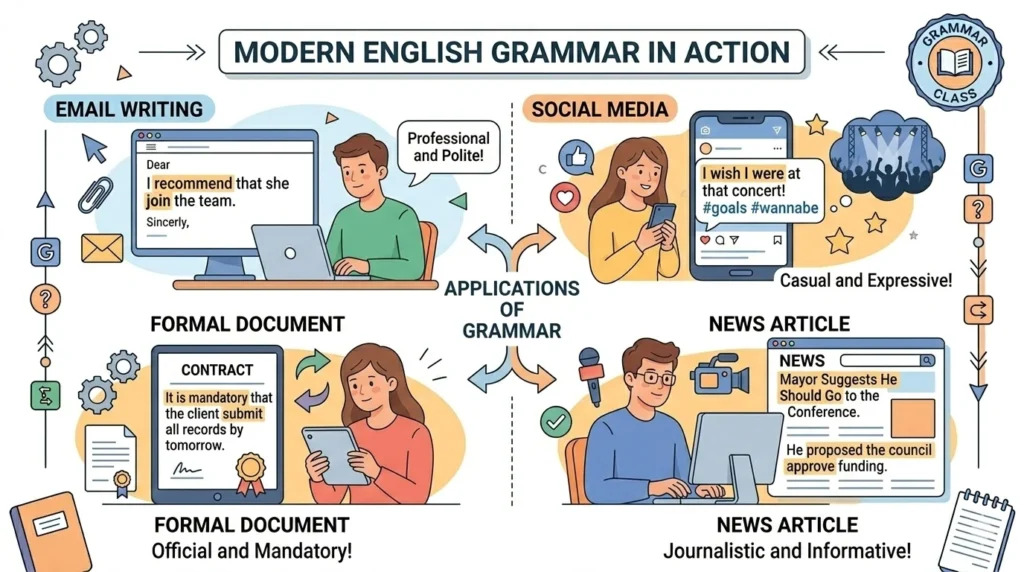
Email example
I suggest that we meet tomorrow.
News writing
The judge ordered that the company pay the fine.
Social media
I wish summer were longer!
Formal writing
It is important that every student be present.
These examples show how present subjunctive or indicative works in real communication.
What Are the 4 Grammatical Moods?
English grammar has four main moods.
| Mood | Purpose | Example |
|---|---|---|
| Indicative | Facts and statements | She works here. |
| Imperative | Commands | Close the door. |
| Interrogative | Questions | Are you ready? |
| Subjunctive | Wishes or hypotheticals | I wish she were here. |
The subjunctive mood is the least common but still important in formal grammar.
What Are the Four Types of Subjunctive?
Grammar experts often describe four types of subjunctive:
| Type | Example |
|---|---|
| Present subjunctive | I suggest he study. |
| Past subjunctive | If I were rich… |
| Formulaic subjunctive | Long live the king. |
| Mandative subjunctive | The teacher insists that he finish the work. |
Understanding these types helps learners decide when to use subjunctive.
Subjunctive or Indicative – Google Trends & Usage Data
Search data shows that people often look up:
- Subjunctive or indicative Spanish
- Subjunctive or indicative French
- Subjunctive or indicative grammar
- Present subjunctive or indicative
Popular regions searching this topic
| Country | Reason |
|---|---|
| United States | Grammar education |
| Spain | Spanish language learning |
| France | French grammar learning |
| India & Pakistan | English learning for exams |
| Latin America | Spanish subjunctive rules |
In languages like Spanish and French, the subjunctive mood appears far more often, which is why learners search for subjunctive or indicative examples online.
Comparison Table: Subjunctive vs Indicative
| Feature | Indicative | Subjunctive |
|---|---|---|
| Purpose | State facts | Express wishes or possibilities |
| Verb form | Normal tense | Base verb form |
| Example | She is here | I wish she were here |
| Frequency | Very common | Less common |
| Use in Spanish/French | Basic mood | Very frequent |
FAQs
1. What is a subjunctive sentence example?
A simple example is:
I wish I were taller.
The verb were shows the situation is imaginary.
2. When can I use subjunctive?
Use the subjunctive mood when talking about:
- Wishes
- Suggestions
- Hypothetical situations
- Demands or recommendations
Example:
The doctor recommends that she rest.
3. What are the 4 grammatical moods?
The four moods are:
- Indicative
- Imperative
- Interrogative
- Subjunctive
Each mood expresses a different attitude toward the sentence.
4. What are the four types of subjunctive?
The four common types are:
- Present subjunctive
- Past subjunctive
- Formulaic subjunctive
- Mandative subjunctive
5. What is the difference between indicative vs subjunctive examples?
Indicative:
She is at home.
Subjunctive:
I wish she were at home.
The first states a fact; the second expresses a wish.
6. Is the subjunctive still used in modern English?
Yes, especially in formal writing, academic texts, and professional communication.
Example:
It is essential that he be present.
7. Are there subjunctive or indicative exercises to practice?
Yes. Grammar books, language learning websites, and ESL courses provide subjunctive or indicative exercises to help learners practice correct usage.
Conclusion
Understanding subjunctive or indicative helps you express ideas more clearly in English. The indicative mood is used for real facts and everyday statements, while the subjunctive mood shows wishes, suggestions, doubts, or hypothetical situations.
Although the subjunctive is less common in modern English, it remains important in formal writing, academic work, and professional communication. Knowing the difference also helps when learning other languages such as Spanish or French, where the subjunctive appears much more often.
A simple rule can guide you:
- Use indicative for reality.
- Use subjunctive for imagination or possibility.
Practicing subjunctive or indicative examples and exercises will make these patterns feel natural. Over time, you will easily recognize when to use phrases like “If I were you” or “I suggest that he go.”
Mastering this small grammar rule improves clarity, credibility, and confidence in both speaking and writing English.

“Rose Tremain is an acclaimed British novelist known for richly imagined historical and contemporary fiction, praised for depth, emotion, and elegant storytelling.”