Have you ever paused while writing and wondered: Should I use standardized or standardised? You’re not alone. This is a very common search, especially for students, professionals, writers, and businesses that work with international audiences. The confusion comes from spelling rules, not meaning. Both words are correct, but they belong to different forms of English.
People search for standardized / standardised to understand the correct spelling, the exact meaning, and how to use the word in real sentences. Many also want to know how it differs from standard, how it works as an adjective, and which spelling Google or formal writing prefers.
This article solves all of that confusion in one place. You’ll get a quick answer, clear definitions, real-world examples, spelling rules, and usage advice for the US, UK, and global audiences. You’ll also learn about standardized test meaning, common mistakes, and synonyms you can use confidently.
By the end, you’ll know exactly when and how to use standardized or standardised—without second-guessing your writing.
Standardized or Standardised
Standardized and standardised mean the same thing.
They describe something made uniform, consistent, or set to a common rule or system.
The difference is spelling:
- Standardized → American English
- Standardised → British English
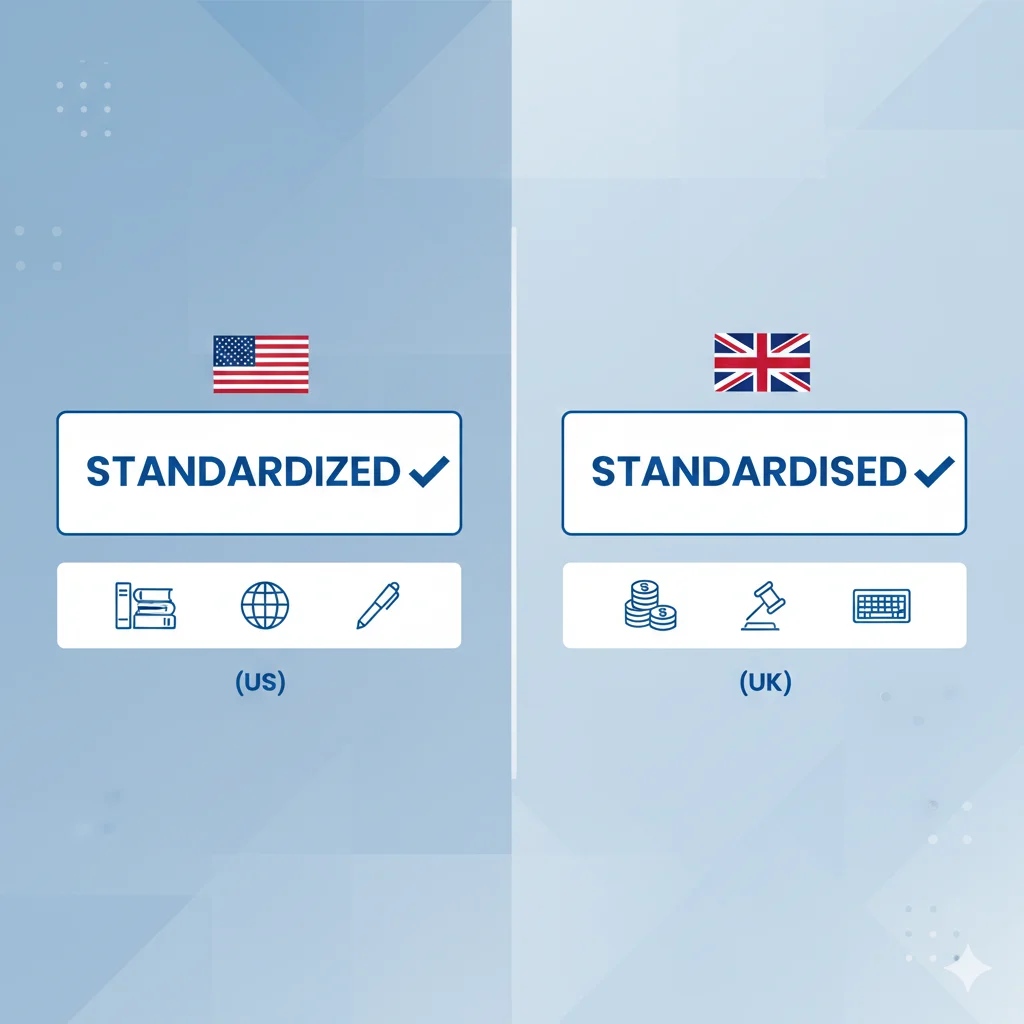
Simple examples:
- The company standardized its training process. (US)
- The company standardised its training process. (UK)
Both forms are correct. The meaning never changes.
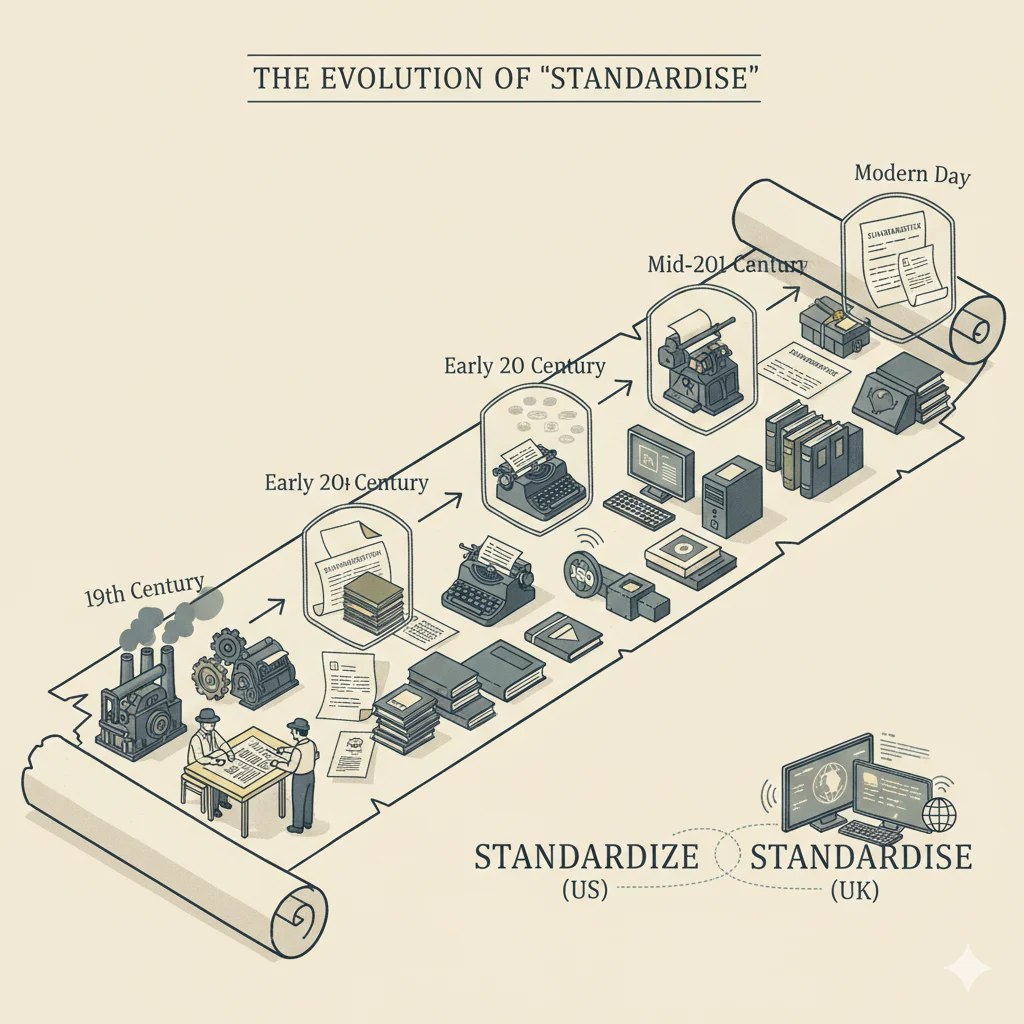
The Origin of Standardized or Standardised
The word comes from standard, which refers to a fixed rule or model.
The verb standardize/standardise developed in the 19th century during industrial growth, when systems, measurements, and processes needed consistency.
Why do spelling differences exist?
British and American English evolved differently:
- British English kept spellings closer to French influence.
- American English simplified spellings to make them easier to learn.
This is why:
- British English uses -ise
- American English uses -ize
Historical note:
The -ize ending actually comes from Greek, not American invention. However, British English later favored -ise in everyday use.
This explains why we see:
- Standardisation (UK)
- Standardization (US)
British English vs American English Spelling
The difference is purely regional. Meaning and usage are identical.
Key comparison
| Feature | American English | British English |
|---|---|---|
| Preferred spelling | Standardized | Standardised |
| Noun form | Standardization | Standardisation |
| Common regions | USA, Canada | UK, Australia, NZ |
| Meaning | Made uniform | Made uniform |
Related spelling patterns
- Organize / Organise
- Realize / Realise
- Normalize / Normalise

Common question answered:
Is it standardised or standardized in the UK?
In the UK, standardised is preferred.
Which Spelling Should You Use?
Your audience decides the spelling.
Use standardized if:
- You write for US readers
- You publish American academic content
- You follow US style guides (APA, Chicago)
Use standardised if:
- You write for UK or Commonwealth readers
- You follow British style guides
- You work with UK institutions
For global audiences:
Pick one spelling and stay consistent. Many global companies prefer standardized because it is widely recognized online.
Professional tip:
Never mix both spellings in one document.
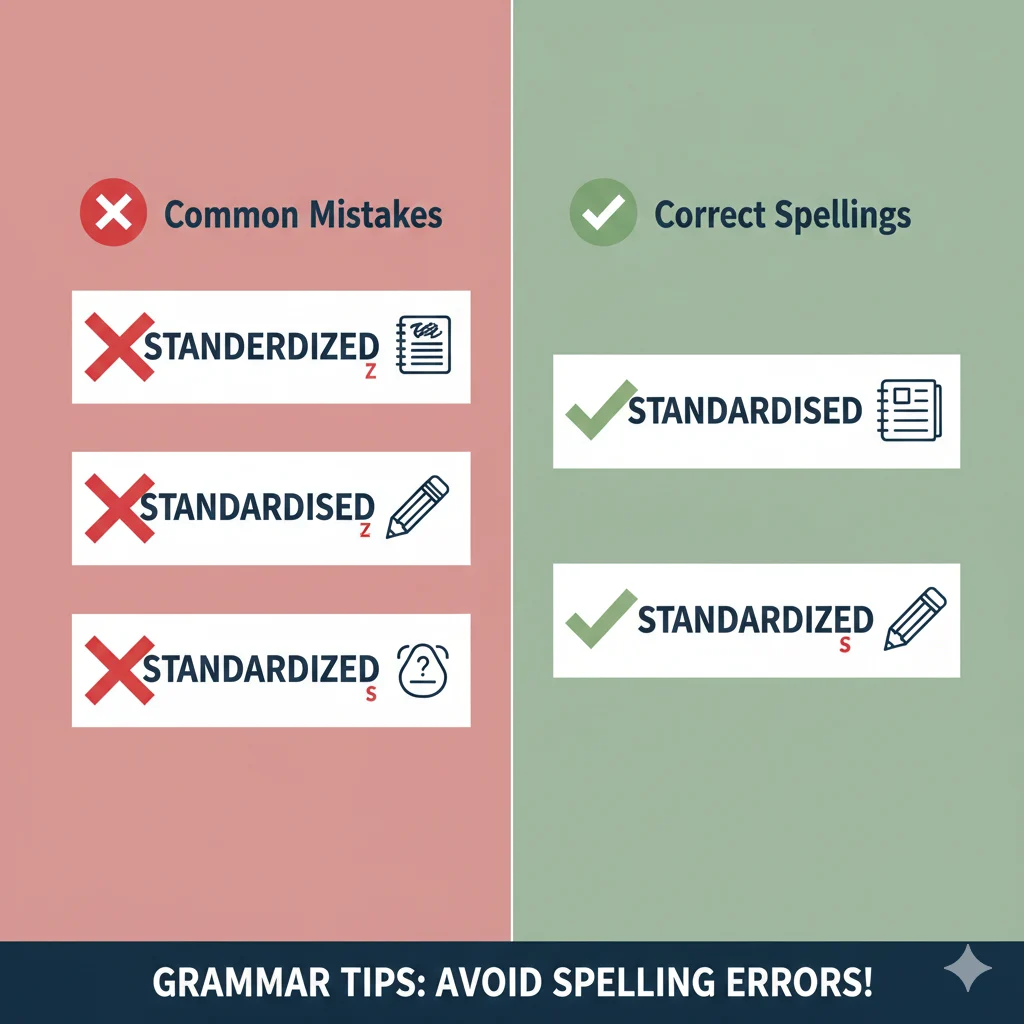
Common Mistakes with Standardized or Standardised
Here are frequent errors and how to fix them:
❌ Mixing spellings
- Incorrect: The process was standardized and later standardised.
- Correct: Use only one spelling.
❌ Confusing with “standard”
- Incorrect: The test is standardized rules.
- Correct: The test follows standardized rules.
❌ Wrong noun form
- Incorrect: How do you spell standardisation in the UK? → standardization
- Correct: Standardisation (UK spelling)
❌ Grammar misuse
- Incorrect: The company standardized of procedures.
- Correct: The company standardized its procedures.
Standardized or Standardised in Everyday Examples
In emails
- “We have standardized the reporting format.”
- “All forms have been standardised for clarity.”
In news writing
- The government introduced standardized safety checks.
- Schools now follow standardised testing methods.
On social media
- “Why are exams so standardized?”
- “We need standardised systems across teams.”
In formal writing
- The organization adopted a standardized approach.
- Results were collected using standardised methods.
Standardized in a sentence
- The company standardized its hiring process.
- The system was standardised to reduce errors.
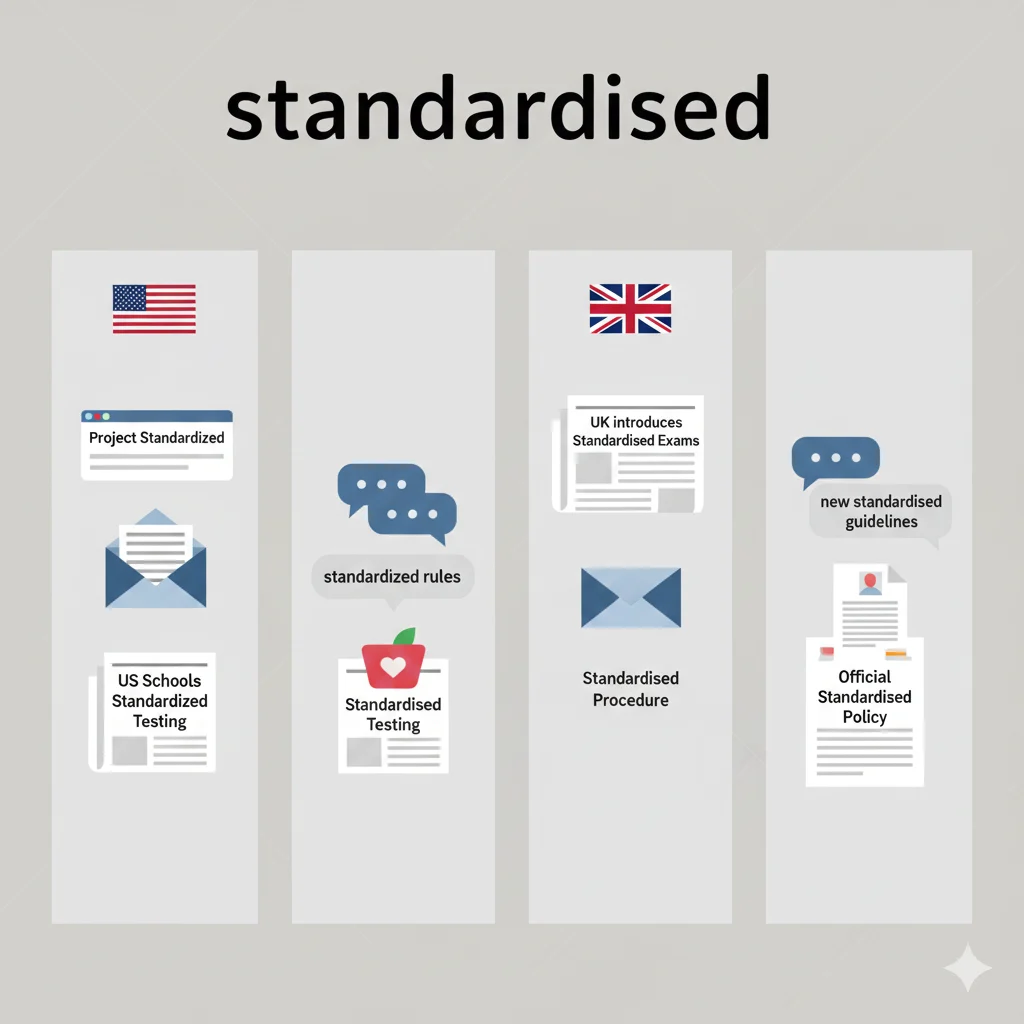
Standardized or Standardised – Google Trends & Usage Data
Search interest shows clear regional patterns.
Usage by region:
- United States → standardized
- United Kingdom → standardised
- Australia & New Zealand → standardised
- Global academic content → both, depending on style guide
Contexts where it appears most:
- Education (standardized test meaning)
- Business processes
- Technology systems
- Healthcare protocols
Comparison table: keyword variations
| Variation | Region | Use case |
|---|---|---|
| Standardized | US | General & academic |
| Standardised | UK | General & academic |
| Standardization | US | Noun |
| Standardisation | UK | Noun |
| Standardized adjective | Global | Descriptive use |
FAQs About Standardized / Standardised
1. What does “standardized” mean?
It means made consistent or uniform by following a set rule or system.
2. What is the difference between standardized and standard?
Standard is the rule.
Standardized means adjusted to match that rule.
3. Is standardized an adjective?
Yes. Example: a standardized test.
4. What is the standardized test meaning?
A test given and scored the same way for everyone.
5. What is a standardized synonym?
Common synonyms include: uniform, consistent, normalized, regulated.
6. Standardized vs standardised – which is correct?
Both are correct. The choice depends on regional English.
7. How do you spell standardisation in the UK?
The correct UK spelling is standardisation.
Conclusion
The confusion between standardized and standardised is about spelling, not meaning. Both words describe something made consistent, uniform, or controlled by shared rules. The only real difference is regional preference—American English uses standardized, while British English uses standardised.
Understanding this helps you write clearly and professionally. Whether you’re working on academic papers, business documents, emails, or online content, choosing the right spelling builds trust with your audience. Always match your spelling to your readers’ location and stay consistent throughout your writing.
Remember, standardized is widely used in global content, while standardised remains the preferred form in the UK and Commonwealth countries. Once you know this rule, the confusion disappears.
Clear language leads to clear communication—and now, you’re fully confident using standardized / standardised correctly.

“Arthur Machen was a Welsh writer known for mystical, atmospheric horror and weird fiction, influencing generations of supernatural storytellers.”