One letter can change everything.
Many people confuse relieving and reliving because they look almost the same. The difference is just one extra “e.” But that small change creates a completely different meaning. Using the wrong word in an email, job document, or article can damage your professionalism.
People often search for “relieving or reliving” because they are unsure which word to use. They ask:
- Is it relieve or relive?
- What do you mean by reliving?
- What does relieving someone mean?
- What does reliving mean in work?
- What is a relieving letter?
This article gives you a clear and direct answer first. Then it explains the origin, spelling rules, British vs American English usage, workplace meaning, pronunciation, common mistakes, real-life examples, Google usage patterns, and expert advice.
By the end, you will fully understand the difference and use both words with confidence.
Relieving or Reliving – Meanings
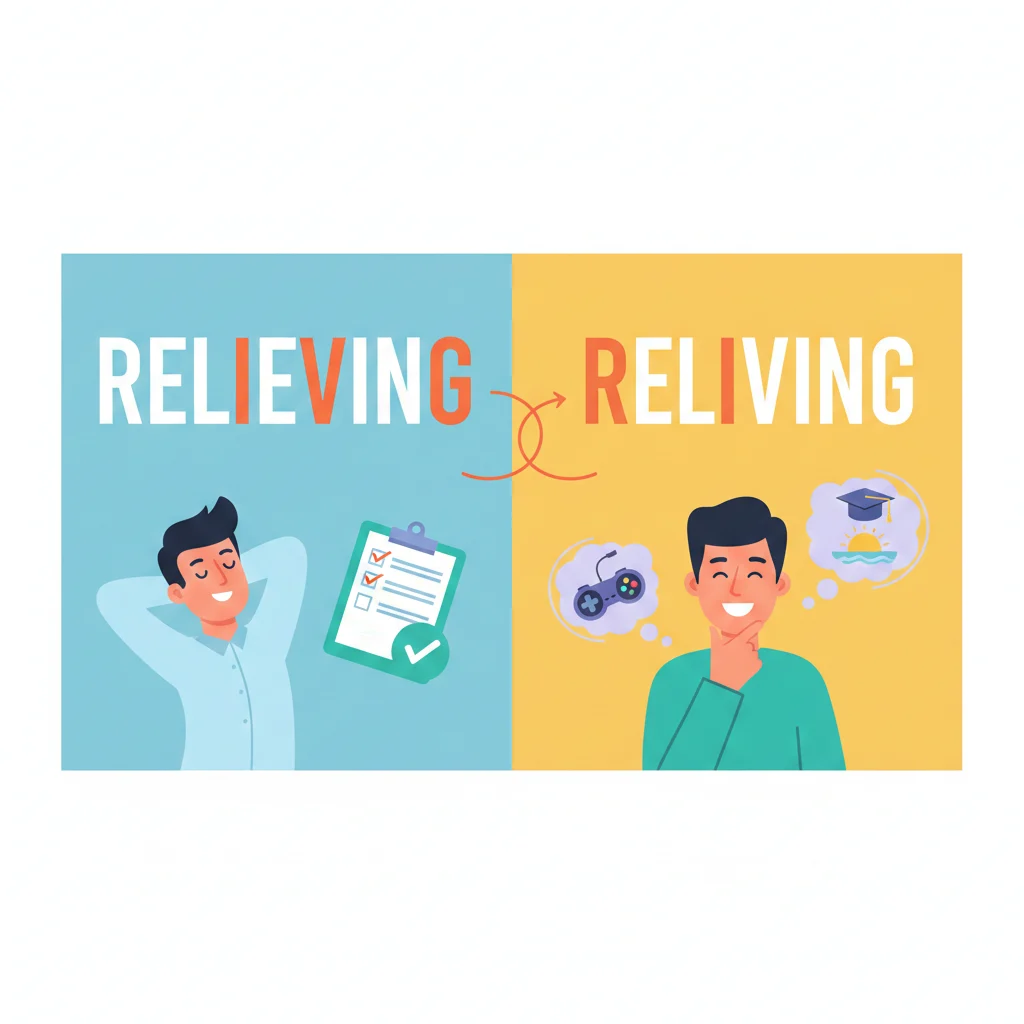
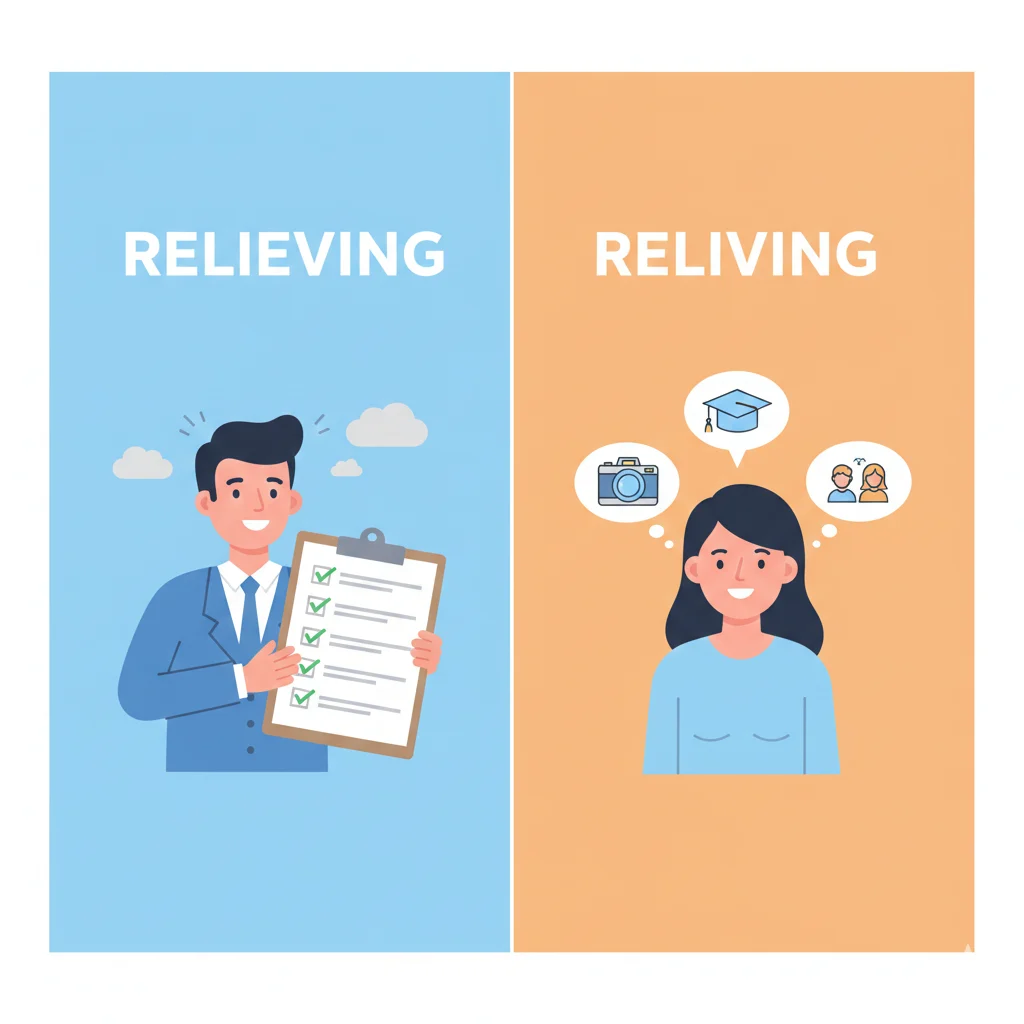
Relieving means reducing pain, stress, pressure, or responsibility.
It comes from the verb relieve.
Reliving means experiencing something again, especially a memory or past event.
It comes from the verb relive.
Simple Examples
- The medicine is relieving my headache.
- The manager is relieving him from duty.
- She is reliving her childhood memories.
- He keeps reliving that special moment.
Direct Answers to Common Questions
Is it relieve or relive?
It depends on meaning.
- Reduce pain or duty → relieve
- Experience again → relive
What do you mean by reliving?
Reliving means mentally experiencing a past event again.
What does relieving someone mean?
It means removing stress, pain, or responsibility from someone.
What does reliving mean in work?
In professional contexts, “reliving” is usually incorrect. The correct term in HR documents is “relieving.”
The Origin of Relieving or Reliving
Understanding word origin helps remove confusion.
Origin of “Relieve”
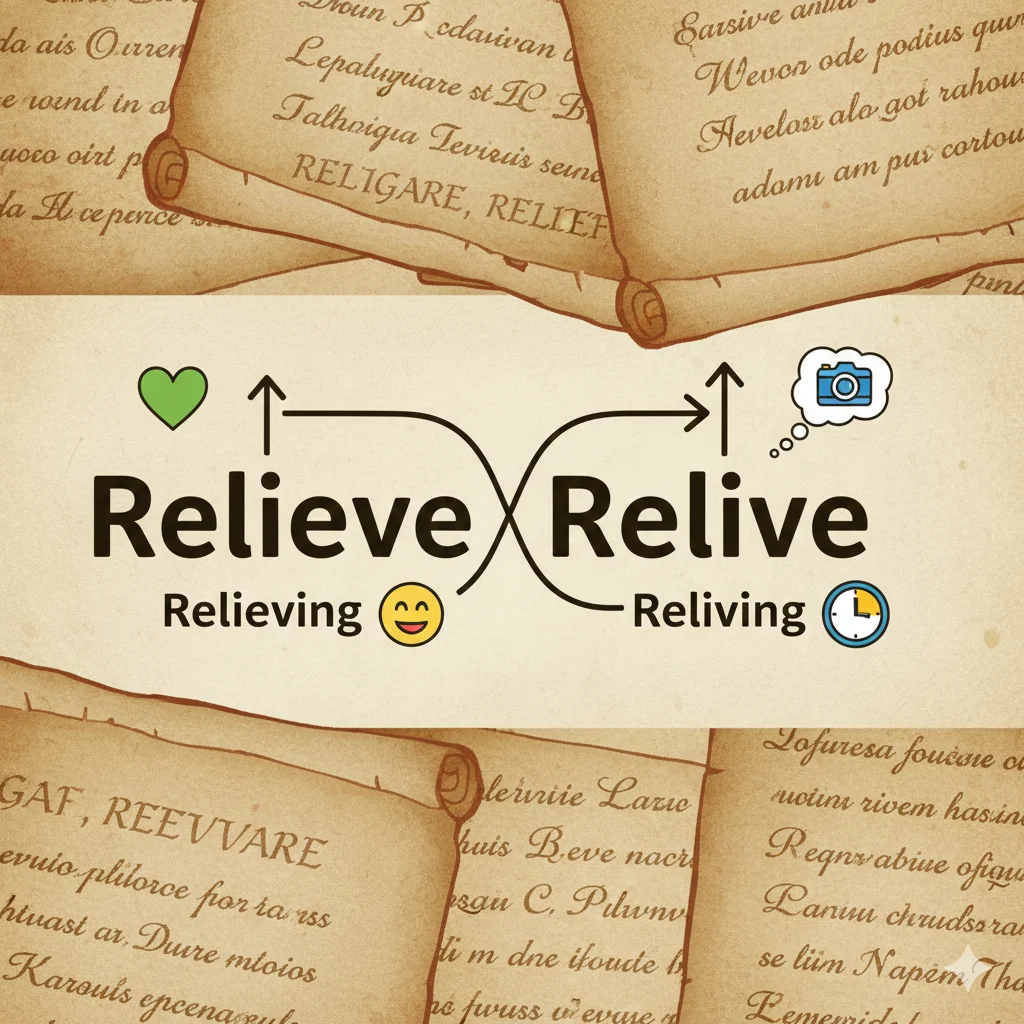
The word relieve comes from Old French relever, meaning “to lift up” or “to lighten.” Over time, it developed the meaning of reducing burden, pain, or pressure.
That is why we use it in professional and daily language:
- Relieving letter
- Relieving order meaning
- Relieve from duty
- Relieving duty meaning
- Relieving feeling
All of these refer to easing pressure or removing responsibility.
Origin of “Relive”
The word relive combines:
- Re- (again)
- Live (to experience)
It literally means “to live again.”
That explains reliving meaning. It refers to going through a past event again in your mind.
Why the Spelling Difference Exists
Both words drop the final “e” before adding “ing.”
- Relieve → relieving
- Relive → reliving
The base words are different, so the meaning changes.
One extra letter completely changes the message.
British English vs American English Spelling
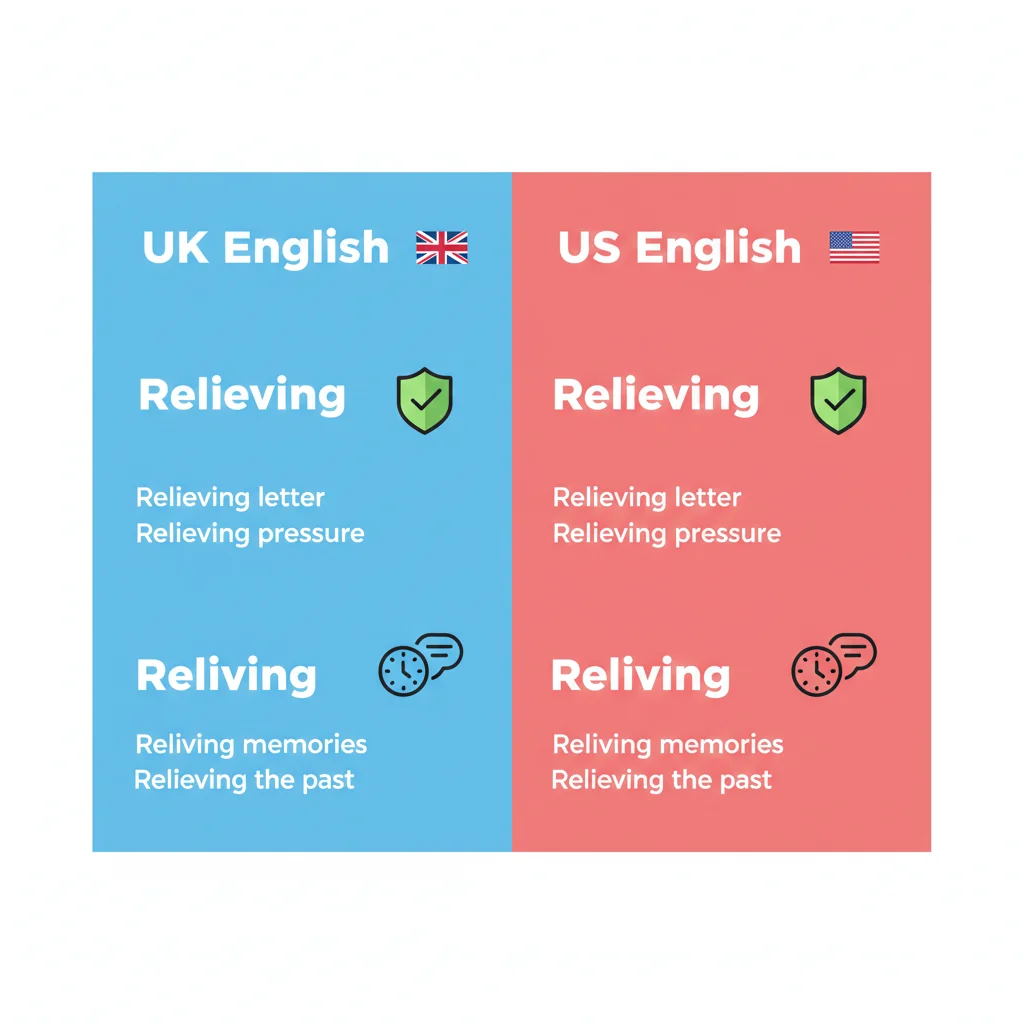
There is no spelling difference between British and American English for these words.
Both use:
- Relieving
- Reliving
However, usage patterns may differ slightly by region.
In India and many Commonwealth countries, terms like Relieving letter and Relieving order meaning are widely used in employment contexts.
In the United States and United Kingdom, “reliving” appears more often in emotional and storytelling contexts.
Comparison Table
| Word | American English | British English | Meaning |
|---|---|---|---|
| Relieving | Same spelling | Same spelling | Reducing burden |
| Reliving | Same spelling | Same spelling | Experiencing again |
| Relieving letter | Used in HR | Used in HR | Official job release document |
The spelling remains the same worldwide. Only the context changes.
Which Spelling Should You Use?
The correct spelling depends on what you want to say.
Use “Relieving” When Talking About:
- Pain reduction
- Stress relief
- Job release
- Duty removal
- Comfort
Examples:
- That was a relieving feeling after the exam.
- The officer was relieved from duty.
- I received my relieving letter.
Use “Reliving” When Talking About:
- Memories
- Emotional recall
- Past experiences
- Storytelling
Examples:
- She is reliving her wedding day.
- He keeps reliving that accident.
- They are reliving their best moments.
In workplace communication, “relieving” is almost always correct.
Common Mistakes with Relieving or Reliving
Because the words look similar, people often confuse them.
Incorrect: I am relieving my childhood memories.
Correct: I am reliving my childhood memories.
Incorrect: The company is reliving him from duty.
Correct: The company is relieving him from duty.
Incorrect: Please provide my reliving letter.
Correct: Please provide my relieving letter.
Easy Memory Trick
Releeving → Long “ee” sound → easing pressure
Reliving → Short “i” sound → memory
Relieving Pronunciation
- Relieving → /rɪˈliːvɪŋ/
- Reliving → /rɪˈlɪvɪŋ/
The vowel sound clearly separates the two meanings.
Relieving in Workplace Context – Complete Explanation
This is where confusion happens most often.
What Is a Relieving Letter?
A Relieving letter is an official document issued by an employer. It confirms that:
- The employee has completed the notice period.
- All duties have been properly transferred.
- The employee is officially released from employment.
This document is important for new job applications and background verification.
Relieving Order Meaning
A relieving order is a formal notice or instruction that releases an employee from a specific position.
Relieve from Duty Meaning
To relieve from duty means to officially remove someone from their job responsibility.
Example:
The officer was relieved from duty after completing his assignment.
Relieving Synonyms
- Ease
- Release
- Reduce
- Free
- Comfort
All of these connect to removing burden.
Reliving in Emotional and Psychological Context
Reliving refers to mentally experiencing a past event again.
It can describe positive memories:
She is reliving her graduation day.
It can also describe painful memories:
He keeps reliving a traumatic event.
Reliving is common in:
- Personal storytelling
- News articles
- Psychology discussions
- Social media captions
It is not commonly used in employment documents.
Relieving or Reliving in Everyday Examples
In Emails
Correct:
Kindly issue my relieving letter.
I will be relieved from duty next week.
Incorrect:
Kindly issue my reliving letter.
In News
The minister was relieved from his position.
The athlete is reliving her historic victory.
On Social Media
Reliving the best vacation ever.
Such a relieving feeling after the results.
In Academic Writing
Reliving traumatic experiences can affect mental health.
The meaning of relieving duty refers to official release from employment.
Relieving or Reliving – Google Trends and Usage Patterns
Search behavior clearly shows different user intent.
In India:
- High searches for “Relieving letter”
- High searches for “Relieving order meaning”
- Frequent queries about “Relieve from duty”
In the United States and the United Kingdom:
- More searches for “Reliving meaning”
- Queries like “Is it relieve or relive?”
Usage by Country
| Country | More Popular Term | Context |
|---|---|---|
| India | Relieving letter | Employment |
| USA | Reliving | Emotional writing |
| UK | Both | Mixed context |
| Canada | Reliving | Memory context |
| Australia | Reliving | Personal stories |
This shows a clear pattern:
Work context → Relieving
Memory context → Reliving
Final Comparison Table
| Feature | Relieving | Reliving |
|---|---|---|
| Base Word | Relieve | Relive |
| Meaning | Reduce pain or duty | Experience again |
| Workplace Usage | Very common | Rare |
| Emotional Writing | Rare | Very common |
| Example | Relieve from duty | Reliving memories |
| Synonyms | Ease, release, free | Recall, revisit |
Frequently Asked Questions
1. Is it relieve or relive?
Relieve means reduce pain or responsibility. Relive means experience again.
2. What do you mean by reliving?
Reliving means mentally going through a past event again.
3. What does relieving someone mean?
It means freeing someone from stress, pain, or job responsibility.
4. What does reliving mean in work?
Reliving is rarely used in professional settings. “Relieving” is the correct term for job release.
5. What is a relieving feeling?
It is a feeling of comfort or reduced stress.
6. What are relieving synonyms?
Ease, reduce, release, free, comfort.
7. Why do people confuse these words?
Because they look similar but have different base words and meanings.
Conclusion
The difference between relieving or reliving may look small, but it is very important.
Relieving relates to reducing pain, stress, or responsibility. It is widely used in professional communication, especially in terms like relieving letter, relieving order, and relieve from duty.
Reliving relates to memory. It means experiencing a past event again. It is common in storytelling and emotional writing.
If you are writing about work, responsibility, or stress relief, use relieving.
If you are writing about memories or past experiences, use reliving.
Clear language builds trust, professionalism, and confidence. A single letter can change the meaning of your message. Now you understand the difference — and you can use both words correctly in every situation.

“Elizabeth Gaskell was a Victorian novelist known for compassionate social realism, memorable characters, and classics like North and South and Cranford.”