
When it comes to words like kiln or kilm, many people pause and wonder: which spelling is correct, and what exactly does it mean? The confusion often arises because the letter “n” is silent in some pronunciations, leading to typos or misunderstandings.
For those interested in pottery, ceramics, or even historical ovens, understanding what a kiln is and how it is used is essential. People frequently search for “Is it kiln or kilm?”, “What does kiln mean?”, or “What is a kiln used for?” because the word appears in crafts, cooking, and industrial contexts.
A kiln is more than just a word; it represents centuries of tradition in firing pottery, baking bricks, and processing materials. For beginners, hobbyists, or professionals, knowing the correct spelling, pronunciation, and usage of kiln can prevent mistakes in writing, ordering equipment, or discussing projects.
This article will clarify the meaning of kiln, explore its origin, explain the spelling differences, provide practical examples, and even show Google trends to indicate how popular the term is worldwide. By the end, you’ll know not only how to spell and say kiln, but also how to use it confidently in everyday writing.
Kiln
A kiln is a type of oven or furnace used to fire, bake, or dry materials. It is most commonly used for pottery, bricks, ceramics, and sometimes food.
- Example: A potter places clay pots in the kiln to harden them at high temperatures.
- Example: Historical texts refer to a traditional kiln used for making bricks in villages.
In short:
- Definition: A high-temperature oven for hardening or firing materials.
- Usage: Pottery, ceramics, bricks, glass, and even some foods.
- Kiln pronunciation: Usually pronounced as “kiln” with a silent n (in many English dialects, it sounds like “kil”).
A common question is: “Is the n silent in kiln?” In modern English, yes, the n is typically silent, though older pronunciations may include it.
The Origin of Kiln
The word kiln has a long history. It comes from the Old English cylan, meaning “to heat” or “to bake.” Over centuries, it evolved through Middle English as kiln or sometimes kilme, reflecting regional pronunciation differences.
- Historical use: Kilns were essential for baking bread, firing pottery, and producing lime or bricks.
- Spelling evolution: Early English texts show variations like kilm, which contributes to today’s common spelling confusion.
- Meaning development: Originally, it referred to any oven or furnace. Today, it is mostly associated with pottery and industrial heating.
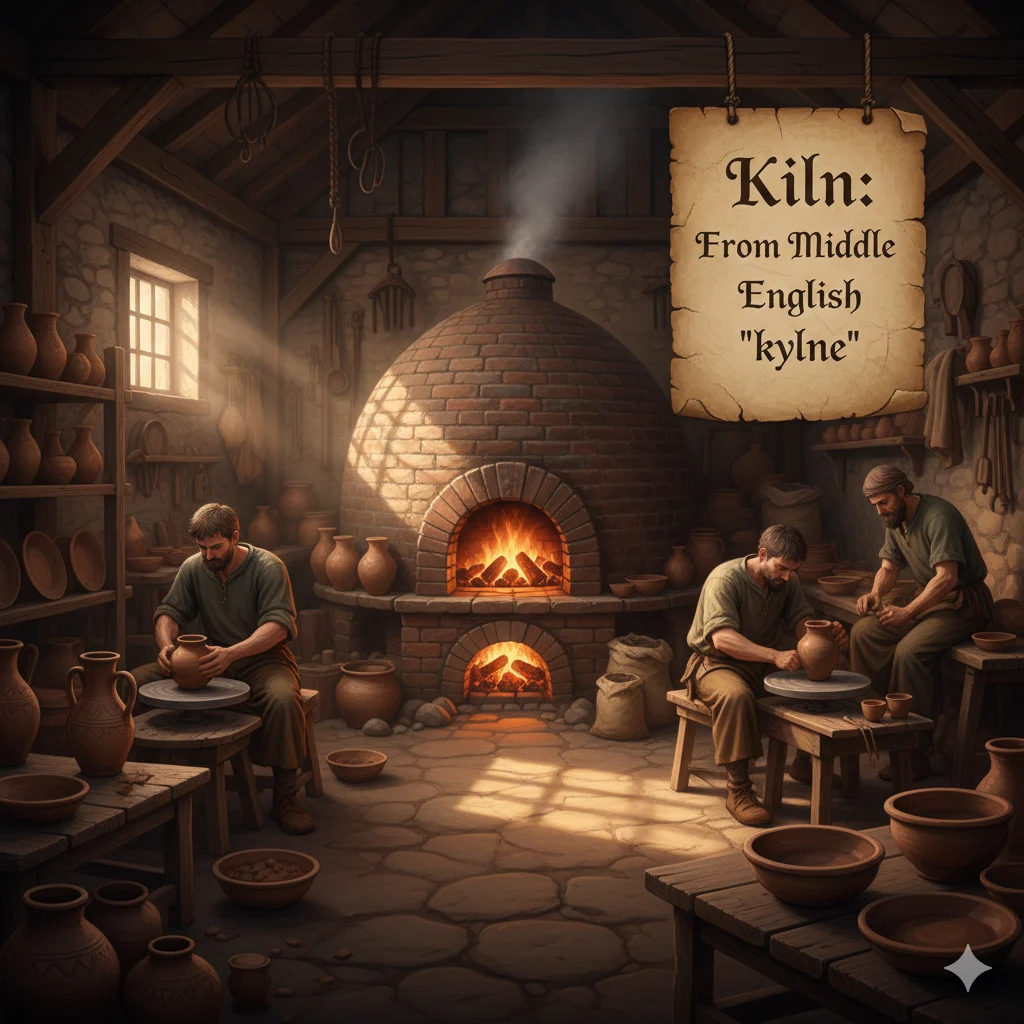
The spelling differences between kiln and kilm mainly come from pronunciation shifts over time. The silent n became standard in modern English, making kiln the widely accepted form today.
British English vs American English Spelling
Both British and American English use kiln as the correct spelling. However, there are subtle differences in pronunciation and usage.
| Feature | British English | American English |
|---|---|---|
| Spelling | kiln | kiln |
| Pronunciation | /kɪln/ or /kɪl/ | /kɪln/ or /kɪl/ |
| Silent “n” usage | Common | Common |
| Alternative spelling | kilm (rare, historic) | kilm (rare, historic) |
| Contextual notes | More historical texts use “kilm” | Modern industrial writing prefers “kiln” |
Example Sentences:
- UK: The potter placed the clay pots in the kiln for firing.
- US: The factory uses a large kiln oven to bake the bricks.
The takeaway: “kilm” is almost never used today, except in historical or linguistic discussions.
Which Spelling Should You Use?
If you are writing for a general audience, professionals, or students, always use kiln.
- US audience: Use kiln, as it is standard in textbooks, industrial manuals, and online content.
- UK/Commonwealth audience: Also use kiln, though older literature may show kilm.
- Global audience: Stick to kiln for clarity and SEO purposes.
Professional Tip: When in doubt, type kiln. It is recognized worldwide, aligns with search trends, and avoids common mistakes like typing kilm or klin.
Common Mistakes with Kiln
Many people make errors when writing or pronouncing kiln. Here are the most frequent mistakes:
- Spelling mistakes:kilm, klin
- Correct: kiln
- Why: Historical spelling variations cause confusion.
- Pronunciation errors: Saying the “n” clearly
- Correct: /kɪl/ or /kɪln/ (silent n)
- Misuse in context: Calling a regular oven a kiln
- Correct: A kiln is specifically for high-temperature firing, not everyday baking.
- Synonym misuse: Using “oven” instead of “kiln” for industrial processes
- Correct synonym: kiln oven, furnace, firebox
By avoiding these mistakes, your writing remains professional and clear.
Kiln in Everyday Examples
Using kiln in writing depends on the context. Here are examples across different formats:
- Emails: “The pottery class will have a live demonstration of the kiln.”
- News articles: “Archaeologists discovered a traditional kiln used to bake bricks 500 years ago.”
- Social media: “Just fired my first mug in the kiln oven! #PotteryLife”
- Formal writing: “A kiln is an essential tool in the ceramic industry, used to harden clay products.”
- Casual writing: “I didn’t know what a kiln was until I joined the pottery workshop.”
Notice how kiln fits naturally in both technical and everyday contexts.

Kiln – Google Trends & Usage Data
According to Google Trends:
- Most searches for “kiln” come from countries with pottery or ceramics traditions, including the US, UK, Australia, and India.
- Seasonal interest: Peaks occur in spring and summer when pottery classes and DIY projects increase.
- Contextual search terms:
- “What is a kiln used for”
- “Kiln for pottery”
- “Kiln oven”
- Keyword popularity comparison:
| Keyword Variation | Global Search Interest |
|---|---|
| kiln | 100% |
| kilm | 5% |
| kiln oven | 60% |
| what is a kiln used for | 70% |
| kiln for pottery | 50% |
Insight: Most users search for kiln, not kilm, reinforcing the recommendation to use the modern spelling.
Keyword Variations Side by Side
| Variation | Correct? | Notes |
|---|---|---|
| kiln | ✅ Yes | Standard spelling |
| kilm | ❌ No | Historical, rare |
| klin | ❌ No | Common typo |
| kiln oven | ✅ Yes | Industrial/DIY term |
| traditional kiln | ✅ Yes | Refers to historical ovens |
| is the n silent in kiln | ✅ Yes | Guides pronunciation |
| what is a kiln for pottery | ✅ Yes | Common SEO phrase |
FAQs About Kiln
1. Is it kiln or kilm?
- The correct modern spelling is kiln. Kilm is outdated.
2. What does kiln mean?
- A kiln is a high-temperature oven used for firing pottery, bricks, or ceramics.
3. What is a kiln used for?
- Firing clay, drying bricks, producing lime, glass, or even food in specialized ovens.
4. Is the “n” silent in kiln?
- Usually, yes. Pronounced as /kɪl/ or /kɪln/.
5. What is a kiln for pottery?
- It hardens clay objects by heating them to high temperatures, making them durable.
6. Can kiln be used as a synonym for oven?
- Partially. Use kiln oven or furnace in industrial contexts, but avoid calling a kitchen oven a kiln.
7. What is the meaning of klin?
- It is a misspelling of kiln. Always use the correct term.
Conclusion
The word kiln is more than a simple spelling question—it represents centuries of tradition in pottery, ceramics, and industrial processes. Knowing the correct spelling, pronunciation, and context ensures clear communication in both professional and casual writing. While historical texts may occasionally show kilm, today kiln is the standard globally. Whether you are a potter, a DIY enthusiast, or a student, using kiln correctly avoids confusion and improves your credibility.
Remember: kiln is for high-temperature ovens, the n is usually silent, and the term fits naturally in emails, news, social media, and technical writing. By understanding its origin, variations, and common mistakes, you can confidently use kiln in all contexts.

“Elizabeth Gaskell was a Victorian novelist known for compassionate social realism, memorable characters, and classics like North and South and Cranford.”