
When it comes to casual slang and describing comfort, many people wonder: is it spelled homie or homey? This small difference in letters can cause big confusion online. Are we talking about a friend, a cozy house, or an adjective describing someone warm and welcoming? Understanding the difference between “homie” and “homey” is important if you want to write correctly, use slang accurately, or simply sound natural in conversation.
People search for this keyword for two main reasons. First, they hear it in casual conversation, music, or social media, and want to know what homie means in slang. Second, they are curious about the spelling and usage differences—especially between American and British English. This article clears up the confusion, explains the origins, gives examples of usage, and helps you decide which spelling fits your context. Whether you’re learning English, writing emails, or reading online posts, you’ll understand when to say “homie” vs. “homey” with confidence.
Homie / Homey
Short Answer:
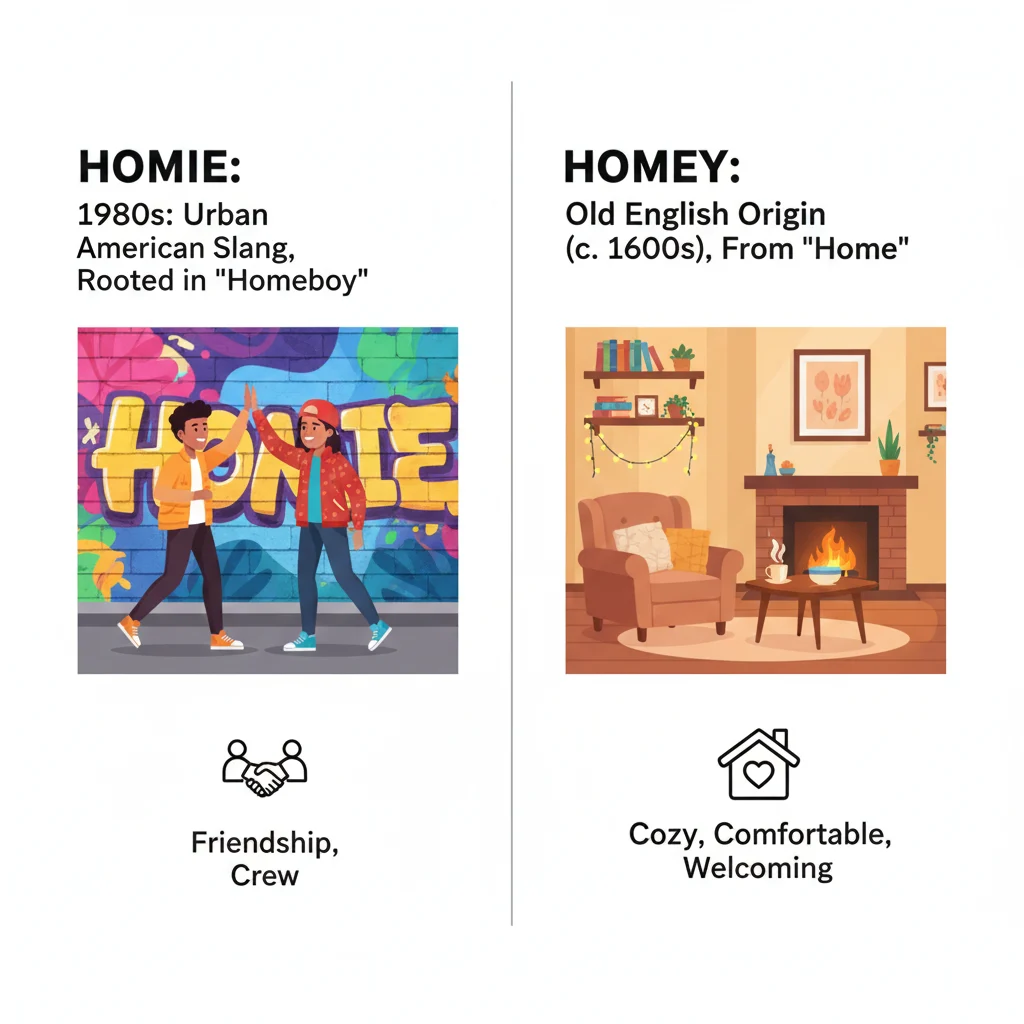
- Homie: Slang term for a close friend or companion. Commonly used in American English, particularly in urban culture.
- Example: “That’s my homie from high school.”
- Homey: Adjective describing comfort, warmth, or a person/space that feels welcoming. Can also be used as slang to refer to a close friend.
- Example: “Her apartment is so homey.”
- Key Tip: If you mean friendship in slang, use homie. If you mean cozy, welcoming, or comfortable, use homey.

The Origin of Homie / Homey
Understanding the origin of these words helps explain why spelling varies.
- Homie: Derived from the American slang “homeboy” or “homegirl,” popularized in the 1980s through hip-hop culture. The term literally means someone from your neighborhood or hometown but evolved to mean a close friend. Online dictionaries like Urban Dictionary confirm this usage: “Homie – your buddy or pal.”
- Homey: Comes from the standard English word home with the adjective suffix -y, meaning “like home” or “comfortable.” Historically, “homey” has been used since the early 20th century to describe a place or person that feels familiar, safe, or welcoming.
- Why the confusion exists: Phonetically, “homie” and “homey” sound almost the same in casual speech, which is why search engines and social media often mix them up.
British English vs American English Spelling
Spelling rules in British and American English can affect which version of the word you use.
- American English: Prefers homie for slang, homey for comfort-related adjectives.
- British English: Uses homey predominantly for comfort and warmth. “Homie” as slang is less common but understood due to global pop culture.
Comparison Table:
| Word | Usage | Region | Example |
|---|---|---|---|
| Homie | Close friend (slang) | US | “That’s my homie from school.” |
| Homey | Cozy, warm, welcoming | US/UK/Commonwealth | “The cabin is really homey.” |
| Homey | Slang (informal friend) | US pop culture | “Yo, my homey is coming over.” |

Tip: The spelling depends more on context and audience than strict grammar rules.
Which Spelling Should You Use?
Knowing which spelling to use depends on your audience and purpose.
- If writing for a US audience:
- Use homie when referring to a friend.
- Use homey when describing a cozy house, warm environment, or a homey person.
- If writing for a UK/Commonwealth audience:
- Stick to homey for describing places or people that feel comfortable.
- Avoid homie unless quoting American slang.
- Global or social media writing:
- Both spellings are understood, but context is crucial. If talking about friendship: homie. If talking about warmth or coziness: homey.
Common Mistakes with Homie / Homey
Many people mix these two words. Here are frequent errors and corrections:
- Incorrect: “I invited my homey to the party.”
Correct: “I invited my homie to the party.” - Incorrect: “Her homey vibe makes everyone feel relaxed.” (if talking about a friend)
Correct: “Her homie vibe makes everyone feel relaxed.” (slang context) - Incorrect: “This apartment is very homie.”
Correct: “This apartment is very homey.” - Incorrect: “Homey or homie, I don’t know which to type!”
Correct: Refer to context: use homie for friend, homey for cozy.
Homie / Homey in Everyday Examples
Let’s see how these words appear in different contexts:
Emails
- Homey: “Your living room setup looks so homey!”
- Homie: “Can you meet my homie tomorrow?” (informal only)
News & Articles
- Homey place meaning: “The café offers a homey environment perfect for remote workers.”
Social Media
- Homie or homey urban Dictionary: “Shoutout to my homies for supporting me!”
- Homey house meaning: “Check out this homey house I found on Airbnb.”
Formal Writing
- Generally, avoid homie. Use homey to describe cozy or inviting qualities:
- “The homey atmosphere of the library encourages reading and relaxation.”
Homie – Google Trends & Usage Data
Looking at Google Trends and online usage:
- Homie: Peaks in searches in the US, especially among younger audiences. Often paired with music, slang, or friendship contexts.
- Homey: Shows consistent searches globally, mostly for decor, comfort, and lifestyle topics.
Interesting Fact:
- Searches like “homey person meaning” and “homey adjective” indicate that people are learning how to use homey correctly beyond just describing a house.
- Urban Dictionary searches such as “what does homie mean in slang” are very high in English-speaking countries, highlighting the word’s informal popularity.
Keyword Variations Comparison Table
| Variation | Meaning | Usage Example |
|---|---|---|
| Homie | Close friend (slang) | “My homie is coming over.” |
| Homey | Cozy, warm, inviting | “Her homey apartment makes me feel relaxed.” |
| Homey person | Friendly, warm person | “She’s a real homey person, everyone likes her.” |
| Homey adjective | Describes comfort or friendliness | “The room has a homey feeling.” |
| Homey house | Cozy or welcoming house | “They live in a homey house in the countryside.” |
| Homie or homey Urban Dictionary | Online slang definition | “Check Urban Dictionary for homie or homey.” |
FAQs about Homie / Homey
- Is it spelled homie or homey?
- Answer: Use homie for slang friendship, homey for cozy or comfortable.
- What is a homey in slang?
- Answer: Sometimes used informally as a friend, but usually refers to a comfortable place or warm personality.
- What does homie mean in slang?
- Answer: A close friend or companion, often used in urban or hip-hop culture.
- What does it mean to be homey?
- Answer: To be friendly, welcoming, or comfortable, often describing a person or place.
- Can you call a person homey?
- Answer: Yes, it can mean a warm, approachable, or friendly person.
- Is homey a word?
- Answer: Absolutely, it is a valid English word describing comfort, warmth, or coziness.
- How do I use homey in a sentence?
- Answer: “Her kitchen feels very homey and welcoming to guests.”
Conclusion
In summary, the difference between homie and homey comes down to context. Homie is slang for a close friend, popularized in American urban culture, while homey is an adjective describing warmth, comfort, or a welcoming environment. British English leans towards homey for cozy settings, while American English differentiates between friendship slang and descriptive comfort.
Remember these key takeaways:
- Homie → Friend, buddy (slang).
- Homey → Cozy, welcoming, comfortable.
- Use the right spelling depending on your audience: US, UK, or global readers.
- Check Urban Dictionary for modern slang context if in doubt.
Whether you’re describing a homey house, a homey person, or your closest homie, using the correct term helps your writing and communication feel natural and professional.

“Elizabeth Gaskell was a Victorian novelist known for compassionate social realism, memorable characters, and classics like North and South and Cranford.”