If you’ve ever paused mid-sentence wondering “Is it he’s or hes?”, you’re not alone. Millions of people search for he’s / hes every month because these tiny words cause big confusion—especially in writing, chat, and exams. The problem is simple: they look almost the same but don’t mean the same thing.
Many users ask questions like “Is hes a word or slang?”, “What does hes mean?”, or “When to use hes and he’s?”. Others confuse it with his, or wonder about he’s meaning boy or girl, he’s meaning in chat, or even odd searches like H i :s meaning, which usually come from pronunciation or typing confusion.
This article solves all of that. You’ll get a quick answer, a deep explanation, real-life examples, spelling rules, and professional advice on which form to use. By the end, you’ll never mix up he’s, hes, or his again—and your writing will look confident, clear, and correct.
He’s / Hes
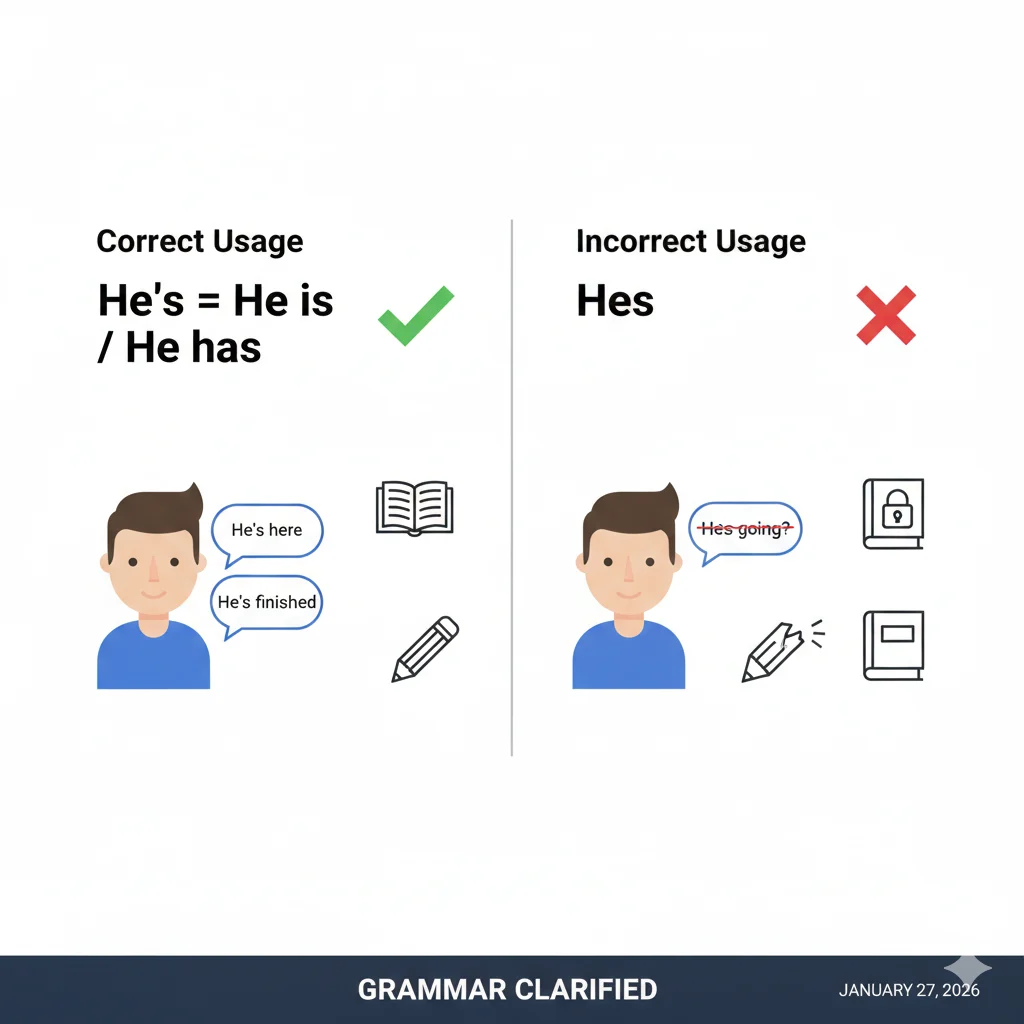
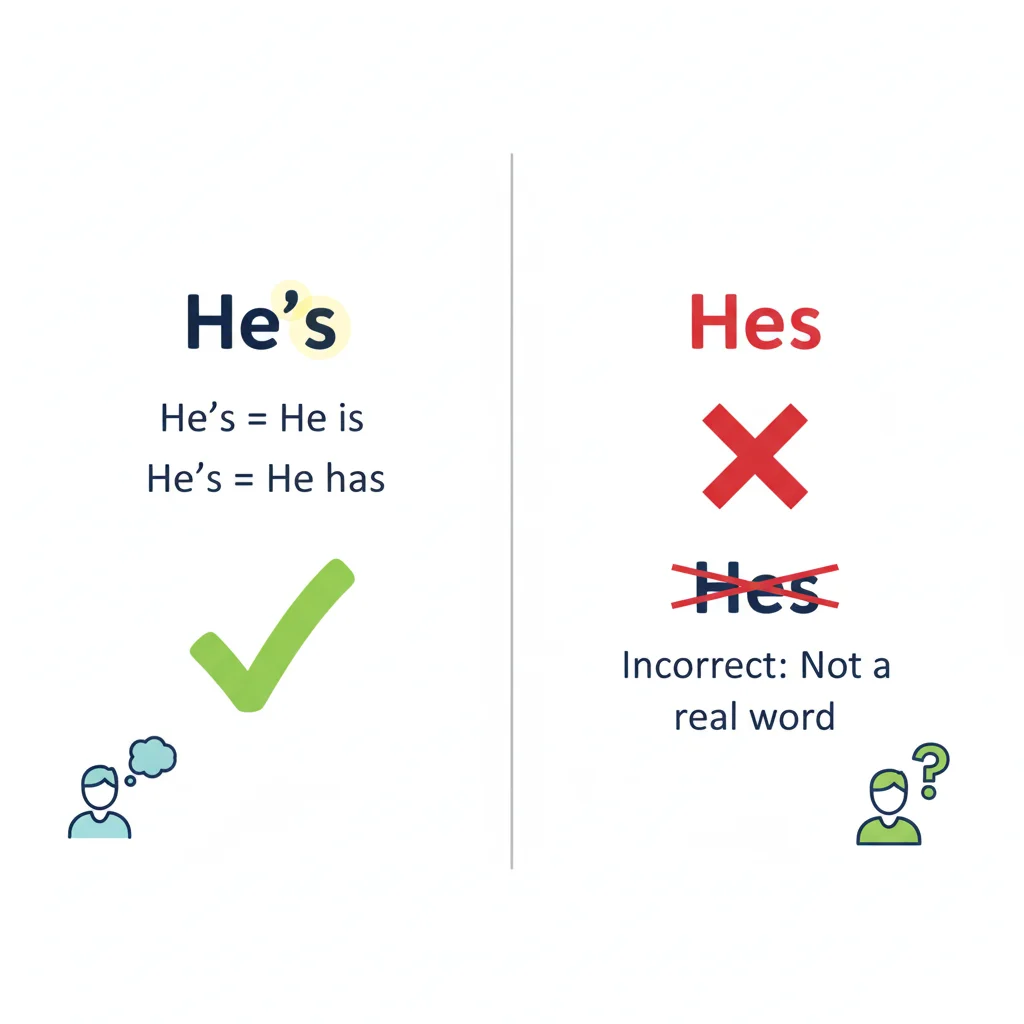
He’s is a real word.
Hes is not a standard English word.
What does “he’s” mean?
He’s is a contraction. It is short for:
- He is
- He has
👉 This is why people search for he’s contraction and he has short form.
Examples:
- He’s happy today. → He is happy today.
- He’s finished his work. → He has finished his work.
Is “hes” a word?
❌ No.
Hes is usually:
- A typo
- A casual chat spelling
- A learner’s mistake
So if you’re asking “Is hes a word or slang?” — it’s neither standard nor correct.
The Origin of He’s / Hes
Where does “he’s” come from?
The word he’s comes from Old English grammar rules, where speakers shortened common phrases to save time. Over centuries, English adopted contractions like:
- He’s (he is / he has)
- She’s
- It’s
- They’re
This made spoken and written English smoother.
Why does “hes” exist?
Hes exists mainly because:
- Apostrophes are skipped in fast typing
- Non-native speakers drop punctuation
- Chat and SMS culture favors speed
That’s why people search H i :s meaning or what does hes mean?—they hear the sound “heez” and guess the spelling.
💡 Important: Only “he’s” is grammatically correct.
British English vs American English Spelling
Good news: There is NO spelling difference between British and American English for “he’s.”
Both follow the same rule.
Comparison Table: British vs American English
| Feature | British English | American English |
|---|---|---|
| He is (short form) | He’s | He’s |
| He has (short form) | He’s | He’s |
| Hes without apostrophe | ❌ Incorrect | ❌ Incorrect |
| Used in formal writing | Limited | Limited |
📌 In both systems:
- He’s = correct
- Hes = wrong
Which Spelling Should You Use?
Use He’s if:
- You are writing emails
- You are posting online
- You are writing articles, blogs, or exams
- Your audience is US, UK, or global
Avoid hes if:
- You want professional writing
- You care about grammar
- You are writing for SEO, school, or work
Audience-Based Advice:
- US audience: Always use he’s
- UK/Commonwealth: Always use he’s
- Global English: Stick with he’s
If you’re asking “When to use hes and he’s?” — the answer is simple:
👉 Always use he’s. Never use hes.
Common Mistakes with He’s / Hes
Let’s fix the most common errors people make.
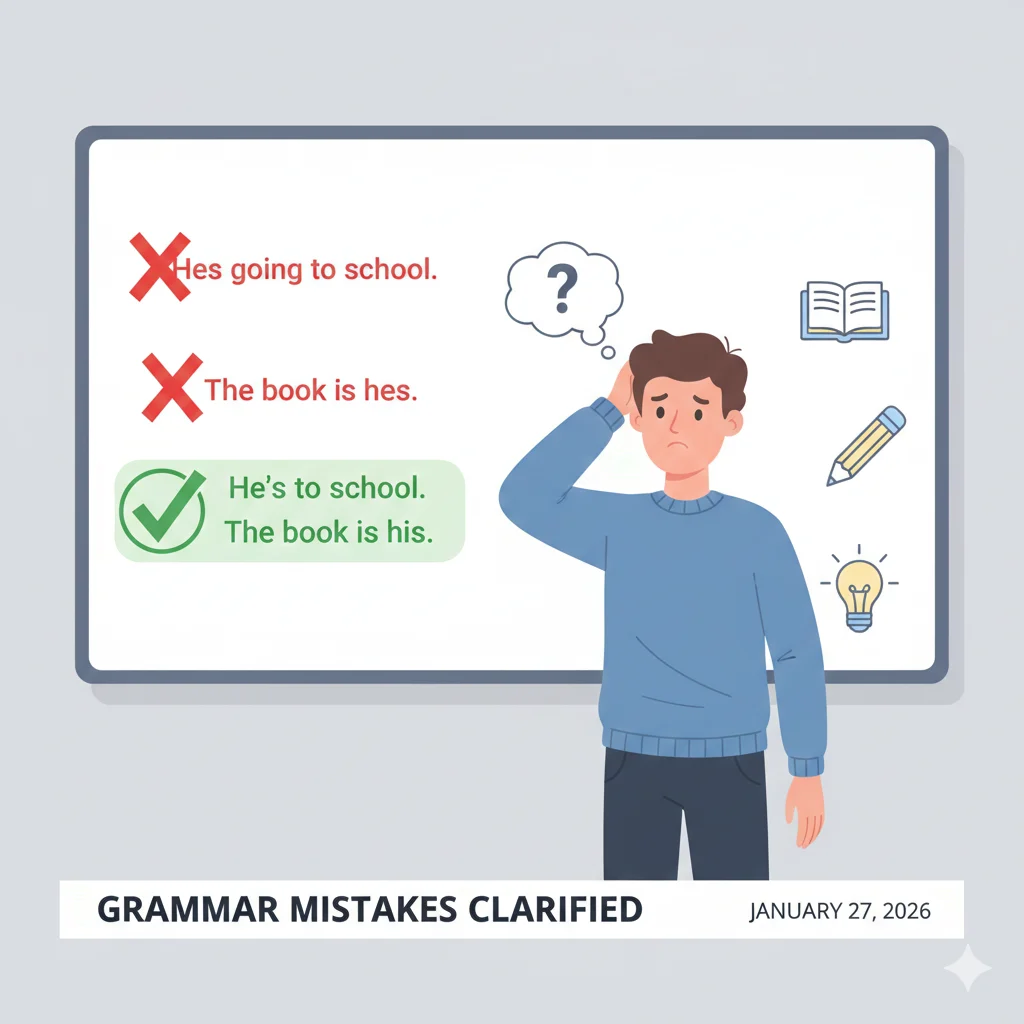
❌ Mistake 1: Using “hes” instead of “he’s”
- ❌ Hes going to school.
- ✅ He’s going to school.
❌ Mistake 2: Confusing his and he’s
This is why people search his or he’s meaning.
| Word | Meaning | Example |
|---|---|---|
| He’s | He is / He has | He’s late today. |
| His | Possession | This is his bag. |
❌ Mistake 3: Using “he’s” for ownership
- ❌ He’s car is new.
- ✅ His car is new.
❌ Mistake 4: Asking “He’s meaning boy or girl”
He’s always refers to a male (boy or man).
For females, use she’s.
He’s / Hes in Everyday Examples
He’s in a sentence
- He’s my best friend.
- He’s already eaten.
He’s meaning in chat
In chats, he’s may appear as:
- hes (incorrect but common)
- hez (slang, incorrect)
Example:
- Chat: hes online now ❌
- Correct: he’s online now ✅
Emails
- He’s attached the document you asked for.
News Writing
- The actor said he’s grateful for the support.
Formal Writing
While contractions are less common in formal writing, he’s is still acceptable in:
- Blogs
- Articles
- Interviews

He’s / Hes – Google Trends & Usage Data
Popularity by Country
Search data shows:
- High searches in India, Pakistan, Philippines
- Common among English learners
- Often linked with grammar confusion
Why people search this keyword
People want to know:
- Is he’s a word?
- How to use hes?
- What does hes mean?
- Is hes slang or correct?
Context of usage
- Education
- Chat English
- Grammar checks
- SEO and content writing
Comparison Table: Keyword Variations
| Term | Correct | Meaning |
|---|---|---|
| He’s | ✅ Yes | He is / He has |
| Hes | ❌ No | Typo / informal |
| His | ✅ Yes | Possession |
| He is | ✅ Yes | Full form |
| He has | ✅ Yes | Full form |
FAQs About He’s / Hes
1. Is he’s a word?
✅ Yes. He’s is a real English word.
2. Is hes a word or slang?
❌ No. It’s a typo or informal mistake.
3. What does he’s mean?
It means he is or he has.
4. How to use he’s?
Use it when shortening he is or he has.
5. Can I use he’s in formal writing?
Yes, but use it carefully. Full forms are safer in academic writing.
6. What is the difference between his and he’s?
His shows ownership. He’s is a contraction.
7. Why do people write hes instead of he’s?
Because they skip apostrophes while typing fast.
Conclusion
The confusion between he’s and hes is common—but now, it doesn’t have to be yours. The rule is clear and simple: “He’s” is always correct. “Hes” is not. If you remember that he’s = he is or he has, you’ll instantly know how to use it in any sentence.
Whether you’re writing an email, chatting online, creating SEO content, or preparing for exams, using the correct form builds trust and clarity. Small grammar details like this matter more than people think—they shape how professional and confident your writing looks.
So next time you wonder “Is hes a word?” or “How to use hes?”, you already know the answer. Choose he’s, add the apostrophe, and write with confidence.

“Wilkie Collins was a pioneering Victorian novelist known for The Woman in White and The Moonstone, shaping modern mystery fiction with suspense and vivid drama.”