Many people search for “fifteen / fifthteen” because they are unsure which spelling is correct. You may have seen both forms online, in messages, or even in product names and addresses. This creates confusion, especially for students, writers, business owners, and non-native English speakers. One letter can change how professional your writing looks.
The truth is simple, but the internet makes it messy. Search engines show results for both spellings. Social media posts repeat mistakes. Even autocorrect sometimes fails. People also search this keyword when looking for things like Fifteen Fifteen Vancouver, Fifteen fifteen price, or pop culture topics such as “Is ‘Fifteen’ based on a true story?” by Taylor Swift. All of this mixes correct spelling with incorrect forms.
This article clears everything up. You will get a quick answer, a full explanation of the word’s history, spelling rules in British and American English, and real-life examples. By the end, you will know exactly how to spell fifteen, when to use it, and why “fifthteen” is always wrong.
Fifteen / Fifthteen
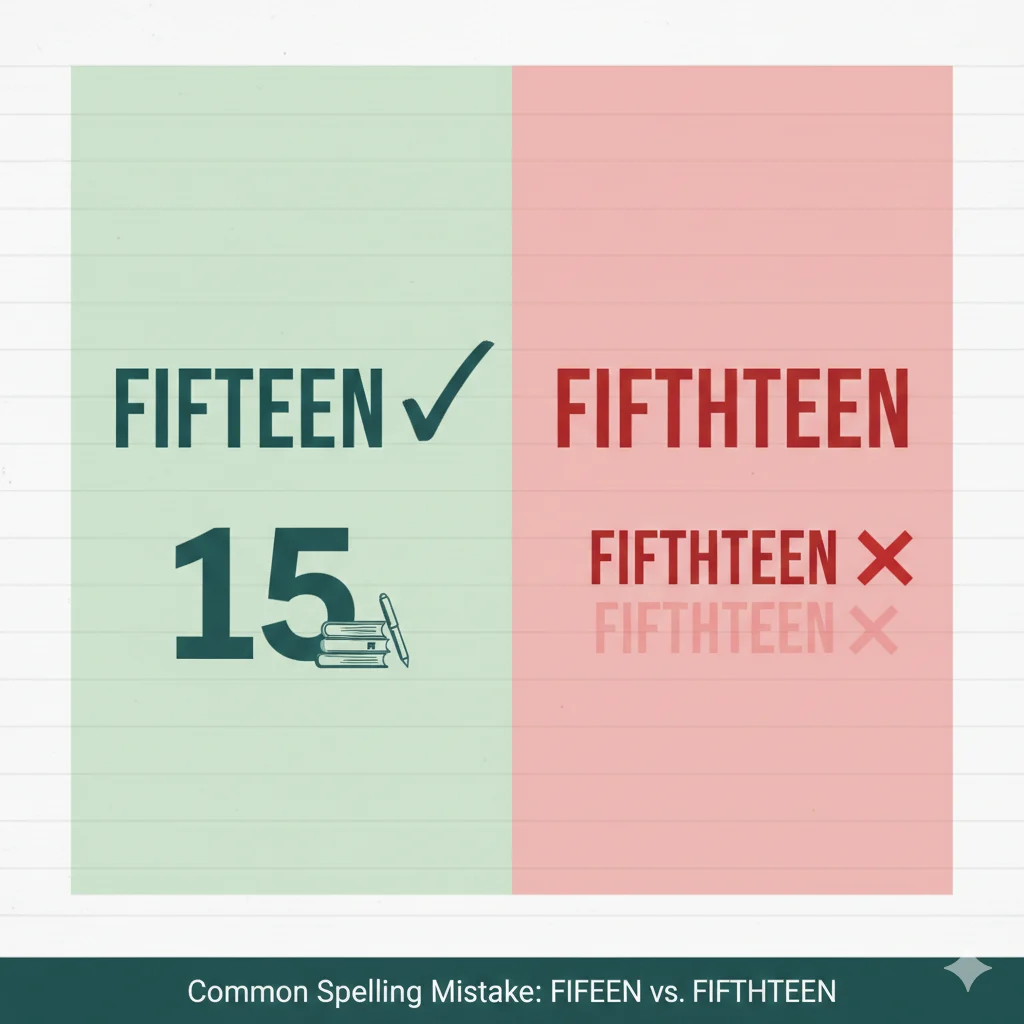
The correct spelling is fifteen. “Fifthteen” is incorrect and not a real English word.
Examples:
- She is fifteen years old. ✅
- I bought fifteen books. ✅
- She is fifthteen years old. ❌
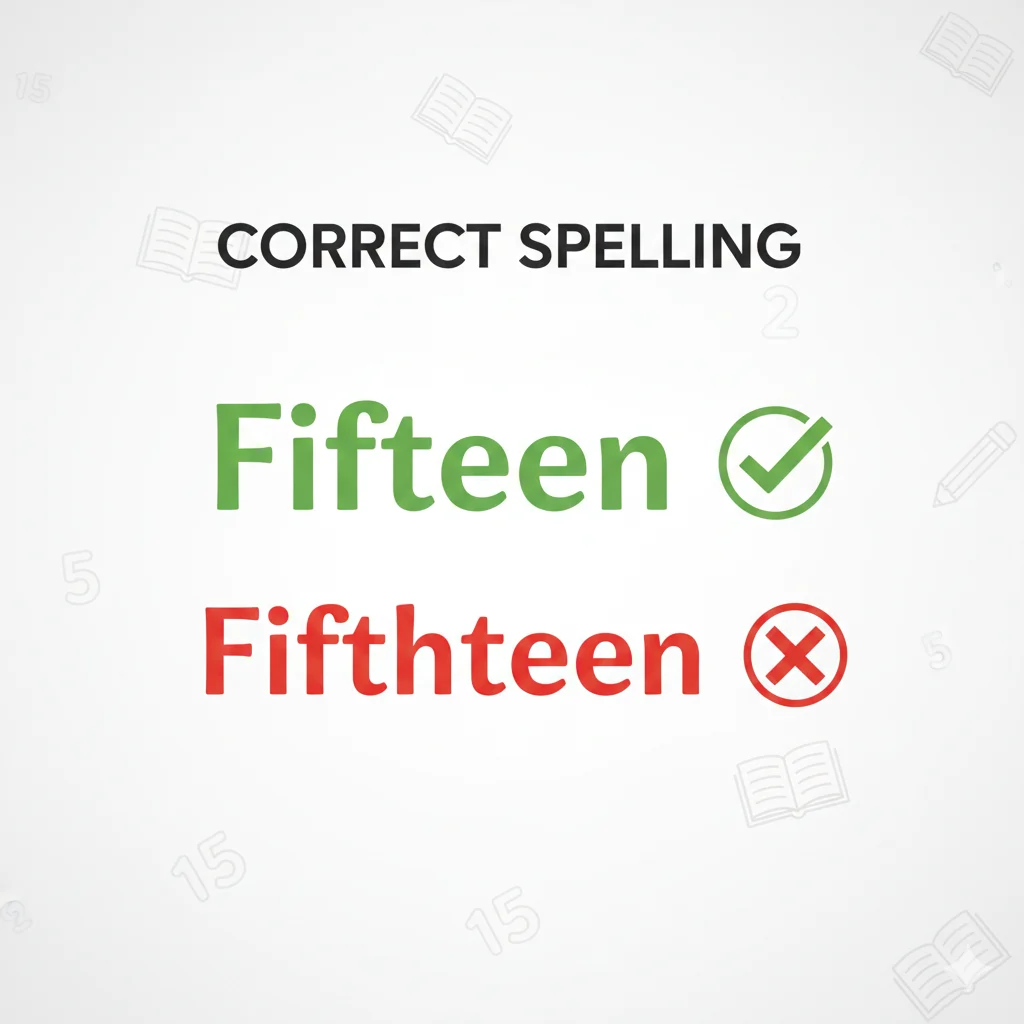
The confusion happens because people mix five and fifth. But fifteen follows number-word rules, not ordinal rules.
The Origin of Fifteen / Fifthteen
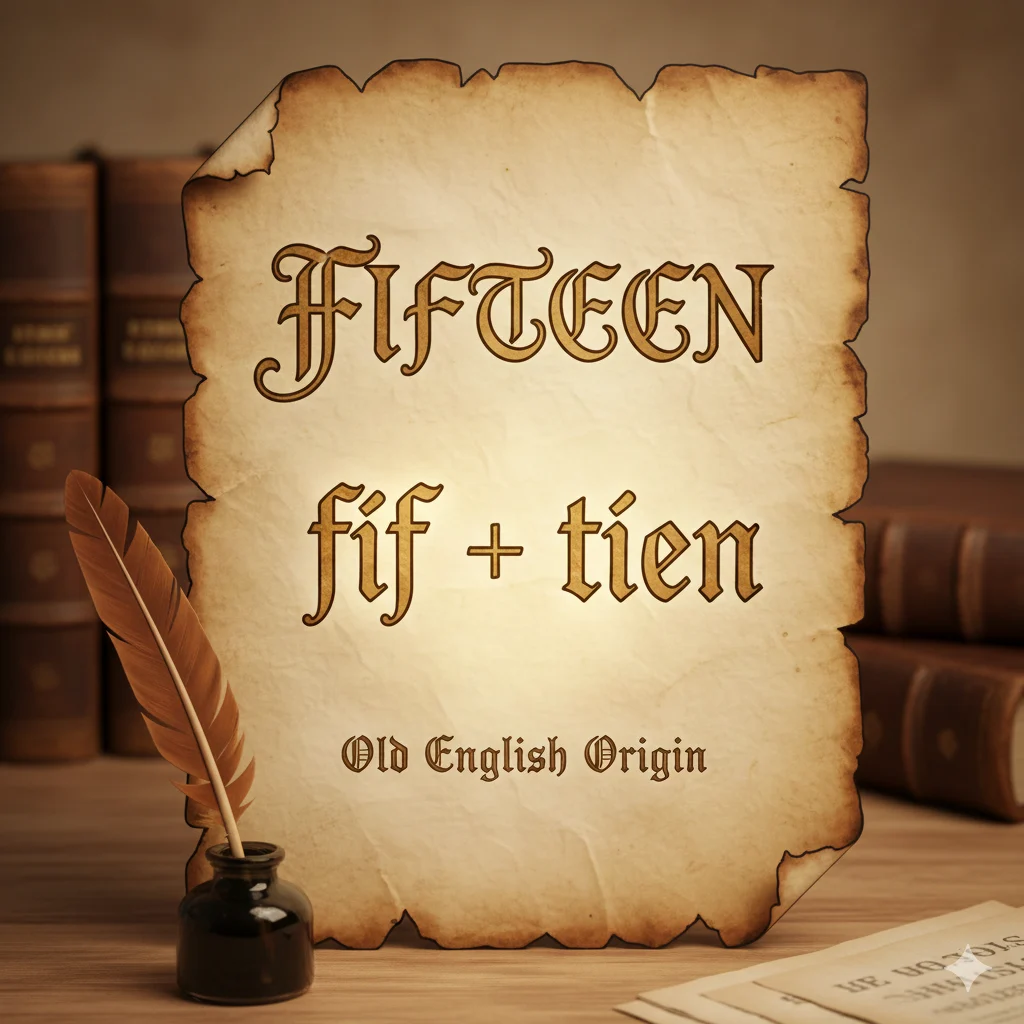
The word fifteen comes from Old English fīftēne. It is made of:
- five
- ten
Long ago, English speakers counted numbers by combining smaller ones. So five + ten became fifteen.
The spelling “fifthteen” never existed in proper English. It likely appeared because:
- People know the word fifth
- They assume numbers work the same way
But ordinal numbers (fifth, sixth) follow different rules than cardinal numbers (five, six).
That is why:
- five → fifteen
- fifth → fifth (not fifthteen)
Spelling differences exist because English evolved over time, not because both spellings are valid.
British English vs American English Spelling
There is no spelling difference between British and American English for this word.
| Version | Spelling | Correct? |
|---|---|---|
| American English | fifteen | ✅ |
| British English | fifteen | ✅ |
| Commonwealth English | fifteen | ✅ |
| Internet misspelling | fifthteen | ❌ |
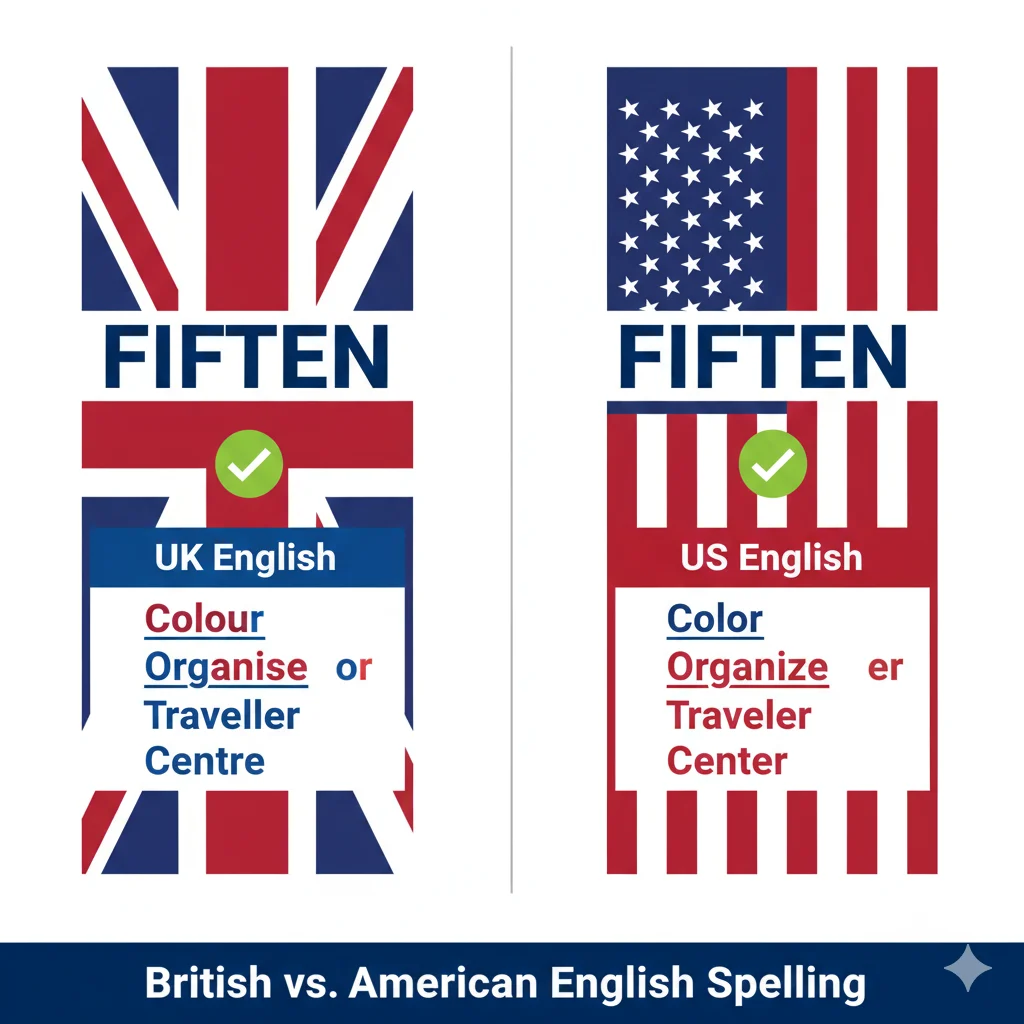
Unlike words like colour/color or centre/center, fifteen stays the same everywhere.
Which Spelling Should You Use?
You should always use “fifteen.”
Here is simple advice by audience:
- US audience: Use fifteen
- UK audience: Use fifteen
- Canada & Australia: Use fifteen
- Global audience: Use fifteen
This applies to:
- School work
- Business writing
- Real estate listings (like Fifteen Fifteen Vancouver price)
- Social media
- News articles
Using “fifthteen” can hurt trust and SEO rankings.
Common Mistakes with Fifteen / Fifthteen
Here are the most common errors:
- Adding “th” by mistake
- ❌ fifthteen
- ✅ fifteen
- Confusing ordinal and cardinal numbers
- Fifth = position
- Fifteen = quantity
- Autocorrect trust
- Always double-check spelling
- Brand or address confusion
- Fifteen Fifteen Vancouver is correct
- Fifthteen Fifteen is wrong
Quick tip:
If you can replace the word with 15, then the spelling is fifteen.
Fifteen / Fifthteen in Everyday Examples
Emails
- “Please send fifteen copies by Friday.”
News
- “The project will finish in fifteen days.”
Social Media
- “Only fifteen tickets left!”
Formal Writing
- “The study included fifteen participants.”
Pop Culture & Searches
- Is “Fifteen” based on a true story?
Yes. Taylor Swift wrote Fifteen about her teenage experience. - When did Taylor write Fifteen?
She wrote it in 2008. - Where was Fifteen filmed?
The music video was filmed in Nashville.
Business & Real Estate
- Fifteen fifteen for sale
- Fifteen fifteen alberni for sale
- Fifteen fifteen floor plan
- Fifteen Fifteen reviews
In all cases, fifteen is the correct form.
Fifteen / Fifthteen – Google Trends & Usage Data
Search data shows:
- “fifteen” is searched far more than fifthteen
- fifthteen appears mostly as a spelling question
- Countries with high searches:
- United States
- Canada (especially for Fifteen Fifteen Vancouver)
- United Kingdom
- Australia
Popular contexts:
- Education
- Song lyrics (Fifteen by Taylor Swift)
- Real estate listings (Fifteen Fifteen Vancouver price)
- Brand names (Fifteen fifteen band)
Google favors correct spelling in rankings.
Comparison Table: Fifteen vs Fifthteen
| Feature | Fifteen | Fifthteen |
|---|---|---|
| Correct spelling | ✅ Yes | ❌ No |
| Dictionary word | ✅ Yes | ❌ No |
| Used in education | ✅ | ❌ |
| SEO friendly | ✅ | ❌ |
| Professional writing | ✅ | ❌ |
FAQs About Fifteen / Fifthteen
1. How do you spell fifteen / 15?
The correct spelling of 15 is fifteen.
2. Is “fifthteen” ever correct?
No. Fifthteen is always wrong.
3. Is Fifteen based on a true story?
Yes. Taylor Swift’s song Fifteen is based on her real life.
4. When did Taylor write Fifteen?
She wrote it in 2008.
5. Where was Fifteen filmed?
The music video was filmed in Nashville, Tennessee.
6. What is Fifteen Fifteen Vancouver?
It is a real estate building. Searches include Fifteen Fifteen Vancouver price and Fifteen fifteen floor plan.
7. Is there a band called Fifteen Fifteen?
Yes, Fifteen fifteen band is a valid name using correct spelling.
Conclusion
The confusion between fifteen and fifthteen is common, but the rule is simple. Fifteen is the only correct spelling. It comes from five + ten, not from fifth. There are no British or American spelling differences, and no exceptions.
Whether you are writing an email, a school paper, a news article, or a listing like Fifteen fifteen for sale, correct spelling matters. It builds trust, improves SEO, and makes your writing clear. Misspelling the word can look unprofessional and confuse readers.
If you remember one thing, remember this:
If you mean the number 15, the word is always “fifteen.
Clear writing starts with correct spelling—and now you know it for sure.

“Rose Tremain is an acclaimed British novelist known for richly imagined historical and contemporary fiction, praised for depth, emotion, and elegant storytelling.”