Words like belief and believe look simple, but they confuse many people. That is why thousands of users search for them every month. People often ask: What’s the difference between belief and believe? or even What’s the difference between belive and believe? These questions come up in school, writing, exams, emails, and even spiritual discussions like belief or believe in God.
The main confusion happens because these words come from the same root but serve different roles in a sentence. One is a noun, the other is a verb. Add spelling errors, pronunciation doubts, and regional usage, and the confusion grows fast. Writers want to sound correct. Students want good grades. Professionals want clarity and trust.
This article solves all of that. You will get a quick answer, deep explanation, real-life examples, and expert advice. We will also cover common mistakes, spelling myths, pronunciation, quotes, trends, and FAQs. Everything is written in simple, clear language so anyone can understand. By the end, you will know exactly how to use belief / believe with confidence.
Belief / Believe – Quick Answer
Belief is a noun.
Believe is a verb.
That’s the core difference.
- Belief means an idea, opinion, or faith you hold.
- Believe means to accept something as true.
Simple examples:
- My belief is that honesty matters.
- I believe honesty matters.

Belief vs believe example:
- Her belief in hard work made her successful.
- She believes in hard work.
👉 If you need an action, use believe.
👉 If you need a thing or idea, use belief.
The Origin of Belief / Believe
Both words come from the Old English word “gelēafa”, meaning faith or trust. Over time, English developed different forms for actions and ideas.
- Believe evolved as the verb form.
- Belief developed later as the noun form.
Why spelling differences exist
English borrows from many languages. That is why spelling is not always logical. The ending -f in belief marks it as a noun. The -ve ending in believe marks action.
Common confusion: belive
Belive is not a word.
It is a common spelling mistake.
Correct: believe
Incorrect: belive
If you are wondering What’s the difference between belive and believe?
The answer is simple: only “believe” is correct.
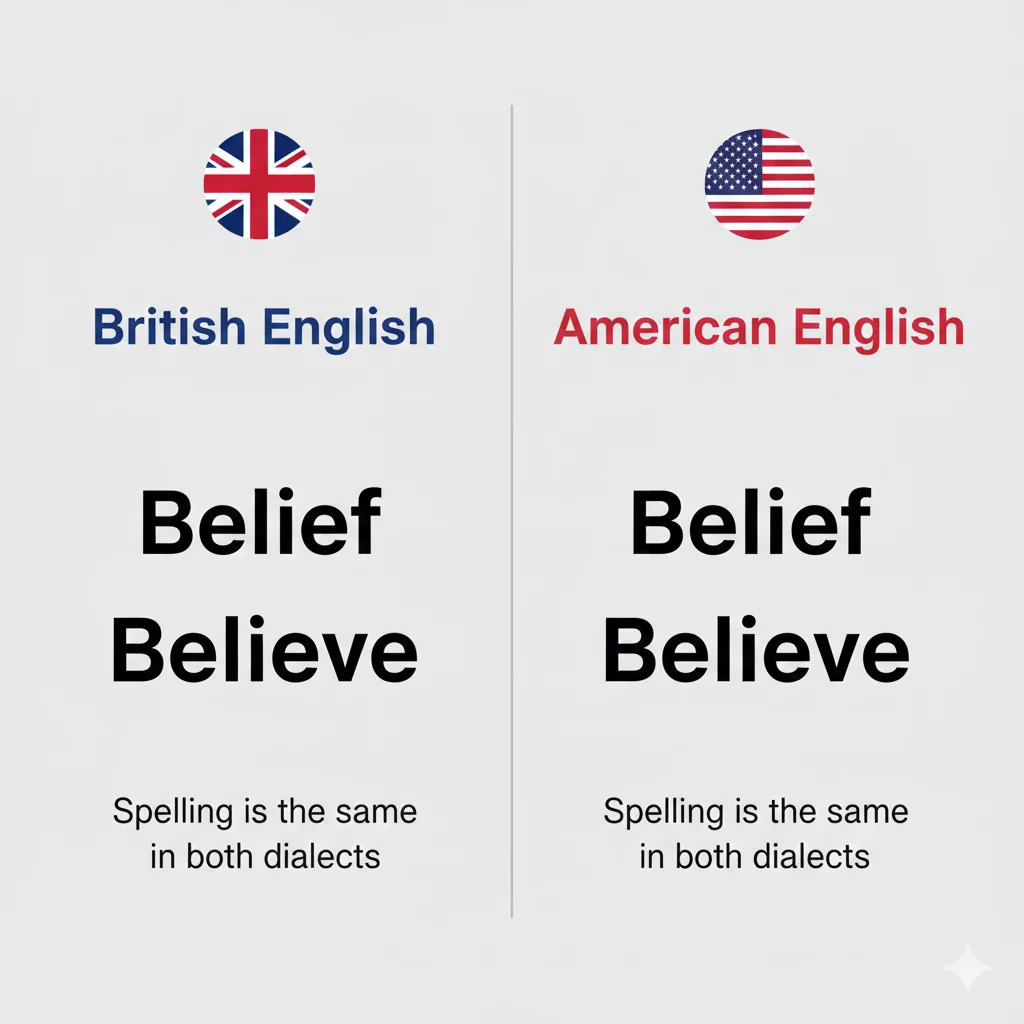
British English vs American English Spelling
Good news: belief and believe are spelled the same in both British and American English.
That makes them easier than words like colour/color or centre/center.
Examples:
- US English: I believe this is true.
- UK English: I believe this is true.
Pronunciation differences
There is a small accent difference, but the meaning stays the same.
Belief vs believe pronunciation:
- Belief: bih-LEEF
- Believe: bih-LEEV
Comparison Table
| Aspect | Belief | Believe |
|---|---|---|
| Word type | Noun | Verb |
| Meaning | Idea or faith | To accept as true |
| US spelling | Belief | Believe |
| UK spelling | Belief | Believe |
| Common error | — | Belive (wrong) |
Which Spelling Should You Use?
Your choice depends on grammar, not location.
Use belief when:
- You talk about an idea, value, or faith
- Example: Freedom of speech is a core belief.
Use believe when:
- You talk about thinking or trusting
- Example: I believe you are right.
Audience-based advice
- US audience: Use standard English grammar rules.
- UK & Commonwealth: Same usage applies.
- Global audience: These words are universally understood.
If you are writing for SEO, education, or business, using the correct form builds EEAT (Experience, Expertise, Authority, Trust).
Common Mistakes with Belief / Believe
Mistakes are common, even among fluent speakers.
1. Using belief as a verb ❌
- Wrong: I belief in you.
- Right: I believe in you.
2. Using believe as a noun ❌
- Wrong: My believe is strong.
- Right: My belief is strong.
3. Misspelling believe ❌
- Wrong: belive
- Right: believe
4. Confusing belief and trust
Many ask: What’s the difference between belief and trust?
- Belief = mental acceptance
- Trust = confidence based on experience
Example:
- I believe he is honest.
- I trust him with my money.
5. Past tense confusion
People ask: What is the past tense of belief?
👉 Belief has no tense (it’s a noun).
👉 Past tense of believe is believed.

Belief / Believe in Everyday Examples
Seeing real usage helps a lot.
Emails
- I believe this plan will work.
- Our company’s core belief is transparency.
News
- The leader stated his belief in peace.
- Experts believe inflation will slow.
Social media
- I believe in myself 💪
- Never lose your belief.
Formal writing
- This study supports the belief that sleep improves focus.
- Researchers believe more data is needed.
Belief believe examples (side by side)
- Her belief in God is strong.
- She believes in God.
Belief or believe in God
- Correct: belief in God
- Correct: believe in God
Belief and believe quotes
- “Your belief creates your future.”
- “If you believe, you can achieve.”
Belief / Believe – Google Trends & Usage Data
Both words are highly searched worldwide.
Usage patterns:
- Believe is searched more because it is used in daily speech.
- Belief is common in philosophy, religion, and psychology.
Popular regions:
- United States
- United Kingdom
- India
- Canada
- Australia
Context-based usage:
- Belief → religion, values, culture, mindset
- Believe → opinions, predictions, trust
Search engines favor content that clearly explains such differences. That is why understanding belief believe meaning, belief believe synonym, and belief vs believe example helps writers rank better.
Keyword Variations Table
| Variation | Correct | Usage |
|---|---|---|
| belief | ✅ | Noun |
| believe | ✅ | Verb |
| belive | ❌ | Spelling error |
| beliefs | ✅ | Plural noun |
| believed | ✅ | Past tense verb |
FAQs About Belief / Believe
1. What’s the difference between belief and believe?
Belief is a noun. Believe is a verb. One is an idea, the other is an action.
2. What’s the difference between belive and believe?
Belive is incorrect spelling. Believe is correct.
3. What’s the difference between belief and trust?
Belief is mental acceptance. Trust is confidence built over time.
4. What is the past tense of belief?
Belief has no tense. The past tense of believe is believed.
5. Are belief and believe synonyms?
No. They are related but different word forms.
Belief believe synonym depends on context.
6. How do you pronounce belief vs believe?
Belief: bih-LEEF
Believe: bih-LEEV
7. Can belief and believe be used in the same sentence?
Yes.
Example: Her belief makes her believe in success.
Conclusion
Understanding belief / believe is easier than it seems once you know the core rule. Belief is a noun. Believe is a verb. One names an idea. The other shows action. Most confusion comes from spelling errors, grammar misuse, or mixing belief with trust. Now you know how to avoid those mistakes.
Correct usage improves writing quality, builds trust, and shows professionalism. Whether you are writing an email, a social post, a school paper, or SEO content, choosing the right word matters. Remember that belive is never correct, and belief has no tense. Pronunciation is simple, and spelling is the same in British and American English.
If you follow the examples and rules in this guide, you will use belief and believe naturally and confidently. Clear language creates clear thinking—and strong belief starts with correct words.

“Rose Tremain is an acclaimed British novelist known for richly imagined historical and contemporary fiction, praised for depth, emotion, and elegant storytelling.”